Record revealed
Request for compensation for the Boston Tea Party
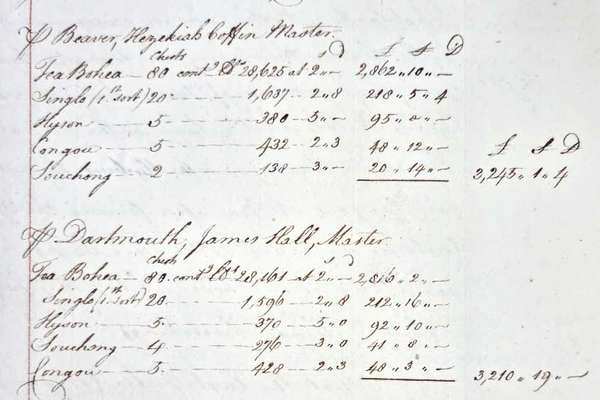
On 16 December 1773, 340 chests of tea were thrown into Boston harbour by protesting colonists. This letter from the East India Company requests reimbursement.
Series
Catalogue reference: DL 30
DL 30
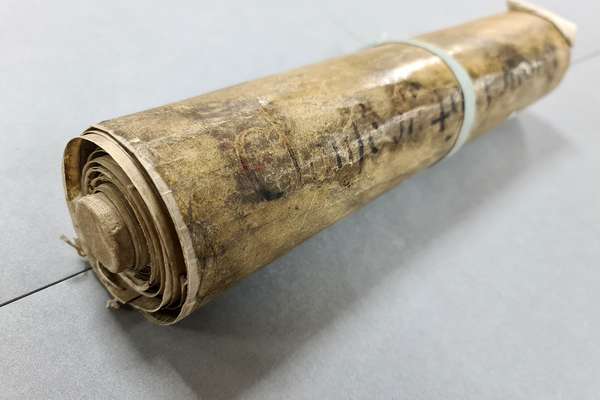
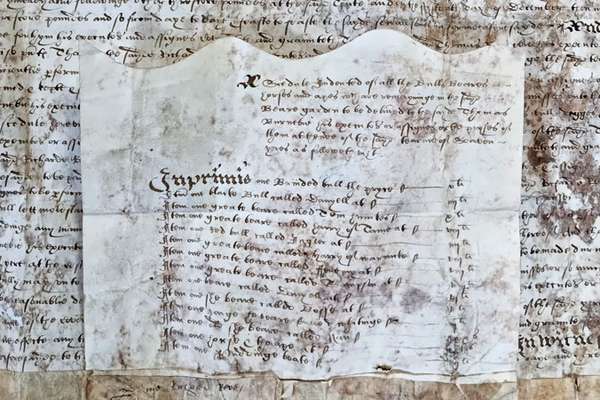
Court rolls of manors, hundreds and other local jurisdictions, and related manorial documents such as estreats, copies of court rolls, and a few ministers' accounts, of the Duchy of Lancaster. The bulk of the contents of the series are court...
Court rolls of manors, hundreds and other local jurisdictions, and related manorial documents such as estreats, copies of court rolls, and a few ministers' accounts, of the Duchy of Lancaster.
The bulk of the contents of the series are court rolls, the records of the courts held, with the principal courts being the court baron. These contain information relating to the conveyancing of land, settlement of disputes, regulation of the assizes of bread and ale, and election of officials. They are potentially a valuable source for confirming or expanding information found in parish registers, which, in some cases, they predate.
This series contains records which pre-date the creation of the Duchy of Lancaster.
This series shares with series SC 2 one single sequence of piece numbers. This arrangement arose in 1896, when the list of court rolls of the Duchy was amalgamated with the list of court rolls in one of the artificial series of Special Collections formed in the nineteenth century, (SC 2). The two series are therefore numbered as in the following example; DL 30/1-152, SC 2/153-227, DL 30/228-251.
Court rolls are scattered between the Public Record Office and many other repositories. A register of all surviving manorial documents is provided by The Manorial Documents Register which can be consulted at the Historical Manuscripts Commission. Other court rolls of crown manors will be found in: CRES 5 LR 3 SC 2
From 2021 Duchy of Lancaster
By the fourteenth century, court rolls generally were becoming increasingly formalised in structure and extensive in length. The lord's steward presided over the court, while a clerk recorded the proceedigns (in Latin until 1733, except for the Interregnum), often entering successive courts on one continuous roll. Sometimes, especially in the seventeeth century, a draft made at the same time and a fair copy written up later. The business of the court included questions of land tenure, customary payments, settlements of disputes and minor woundings, regulation of the assizes of bread and ale and election of officials.
By the sixteenth century, these courts had begun to decline with the increasing use of hired labour and subsequent use of hired labour and subsequent changes in estate management. In the nineteenth century, much copyhold material was converted to freehold, although the administration of copyhold material was converted to freehold, although the administration of copyhold land tenure by manorial courts, continued until copyhold tenure was finally abolished by the Law Of Property Act 1922. Following this Act, copies of the court roll (being the necessary evidences for conveyances of copyhold tenureland) were placed with all other manorial records under the charge of the Master of the Rolls, by the Law of property (Amendment) Act 1924, which also made provision for rules to be drawn up concerning their control and custody.
Records of the Duchy of Lancaster
Duchy of Lancaster: Court Rolls
Record revealed
Record revealed
Record revealed
Records that share similar topics with this record.