Record revealed
Jane Austen’s will

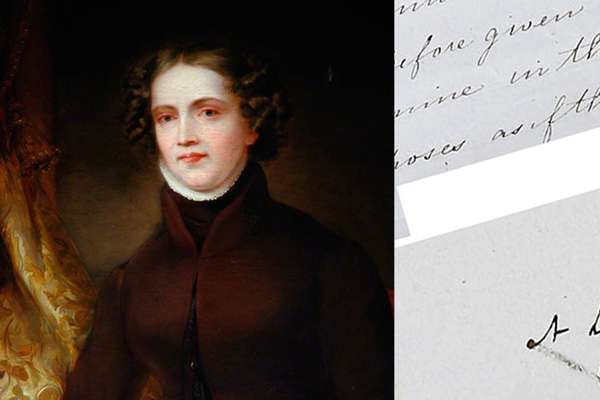
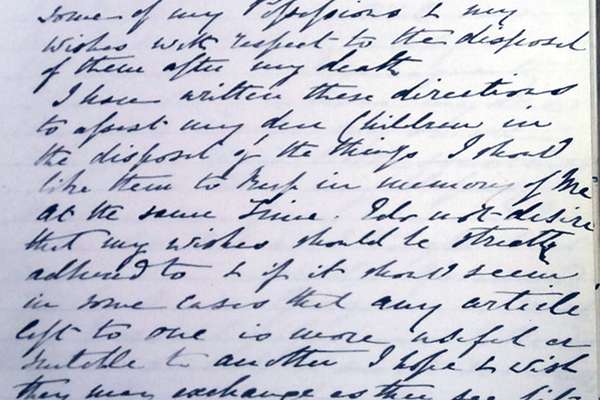
Explore Jane Austen's will, in her own handwriting, which shows how the novelist planned to share her belongings with family and friends after her death.
Series
Catalogue reference: PROB 57
PROB 57
Accounts and miscellaneous papers of Prerogative Court of Canterbury (PCC) officials; giving details of PCC staff, and the administrative mechanisms of the Court. Although most of the records appear to have belonged to the officials of the PCC,...
Accounts and miscellaneous papers of Prerogative Court of Canterbury (PCC) officials; giving details of PCC staff, and the administrative mechanisms of the Court. Although most of the records appear to have belonged to the officials of the PCC, it is possible that some of the papers relate to their activities as proctors rather than to their duties as court officials.
The records include:
These documents are not uniform in their nature, coverage or provenance. Though most of them appear to have belonged to the officials of the Prerogative Court of Canterbury, it is possible that some of the papers relate to their activities as proctors rather than to their duties as court officials.
The records of the Court of Arches (mainly 17th-century) are held at Lambeth Palace Library. It is probable that material of an ephemeral character, such as memoranda, correspondence, notes and reports, was kept in the private offices of the personnel involved and has not therefore survived.
During the nineteenth century the officers of the Prerogative Court of Canterbury (PCC) comprised one judge, three principal registrars, three deputy registrars, one record keeper, one entering clerk, one clerk for each of the five different seats in the office, examiners, one sealer and one apparitor.
The clerks of the seats of the PCC were appointed by the principal registrars. They appointed other clerks to work under their supervision. In the seat allotted to them, the clerks of the seats were employed in drawing up commissions to swear executors and administrators, drafting and attesting administration bonds, inspecting wills submitted for probate, completing probates and administrations, conducting searches to prevent the issue of duplicate grants of probate or administration, and storing wills, bonds and commissions until they were registered. The appointments of clerks of the seats were entered in the muniment books of the PCC.
The PCC record keeper (with the help of an assistant) was responsible for the custody, registration, preservation and storage of wills, administrations, depositions and answers. He was in charge of issuing copies of wills, probate acts and administration acts when applied for and keeping accounts of all such issues. The record keeper also directed the collation of registered wills and the production of bound parchment calendars (indexes) for public reference. The appointments of record keepers were recorded in the PCC muniment books.
The personal appearances of litigants in the ecclesiastical courts were relatively few. Parties in a case were usually represented by their proctors and advocates, the counterparts of solicitors and barristers in modern secular courts. Officials of the Prerogative Court of Canterbury were usually proctors. The formal admission of advocates and proctors to the civil law courts was recorded in the act books of the Court of Arches.
It should be noted that the work performed by PCC personnel in their various capacities was often combined with similar duties in other courts. There was a close relationship between the Court of Arches, the ecclesiastical court of appeal of the Province of Canterbury, the Prerogative Court of Canterbury, the High Court of Admiralty and other civil law courts. Many of the individuals whose names appear in PROB 57 were directly involved in the administrative business of several courts.
Records of the Prerogative Court of Canterbury
Prerogative Court of Canterbury: Accounts and Papers of Record Keepers and Other Officials
Record revealed
The story of
Record revealed
Records that share similar topics with this record.