Record revealed
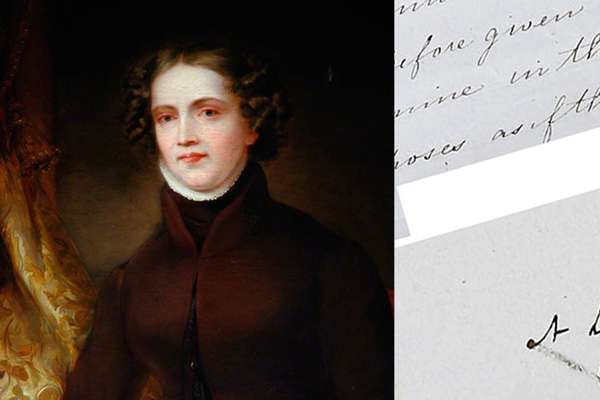
Jane Austen’s will

Explore Jane Austen's will, in her own handwriting, which shows how the novelist planned to share her belongings with family and friends after her death.
Series
Catalogue reference: PROB 24
PROB 24
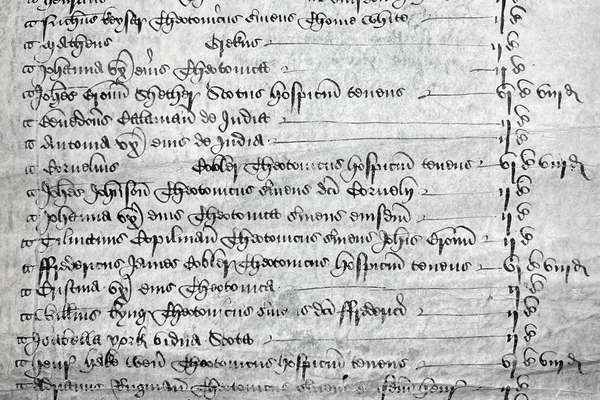
Depositions of witnesses in causes heard by the Prerogative Court of Canterbury or, during the Commonwealth period, the Court for Probate of Wills and Granting Administrations.The depositions were taken by officials at the Court's registry and...
Depositions of witnesses in causes heard by the Prerogative Court of Canterbury or, during the Commonwealth period, the Court for Probate of Wills and Granting Administrations.
The depositions were taken by officials at the Court's registry and were therefore known as town depositions to distinguish them from country depositions taken by commission.
Most of the depositions relate to the circumstances in which wills, whose authenticity was contested, were made and executed (or allegedly made and executed), including the alleged states of mind of testators at that time. Many other depositions relate to causes in which the deceased died intestate, and the identity of the next of kin was disputed. Many such disputes contested the legitimacy of the deceased's marriage or marriages.
PROB 24/1-96 are bound volumes of depositions covering 1657 to 1788, PROB 24/97-114 are bundles of unbound depositions.
The PROB 24 series list gives two dates. The first supplies the dates of the allegations to which the depositions in the piece concerned relate. The second supplies the date ranges of the depositions themselves. The first dates are therefore useful for relating allegations in PROB 18 to depositions in PROB 24. The seriest also indicates which pieces have indexes.
The bound volumes in PROB 24/1-96 have original indexes to the names of the causes to which they relate.
If several depositions relating to the same cause are bound together in unbroken sequence the original indexes generally give only the folio number for the first deposition in the sequence.
PROB 24/10, 57-59 are without original indexes.
The unbound bundles of depositions which comprise PROB 24/97-114 do not have any original indexes.
PROB 24/97-114 were rearranged in alphabetical order by name of cause (in 1975).
In 1975 Supreme Court of Judicature
Witnesses who could travel to London to give evidence were produced by the proctor acting for the party on whose behalf they were to appear and sworn before a surrogate of the judge of the Court in the surrogate's chambers.
The examinations themselves were conducted by a deputy registrar of the Court before 1691, and from that year by officials known as examiners.
Examinations were normally taken in chief, that is on an allegation of either party to the cause, or on interrogatories, which were drawn up to question the witness, and submitted by the proctor acting for the opposing party.
The witness was given a copy of the interrogatories when sworn, so that he or she could study them before the examination. The witnesses' depositions take the form of responses to the allegations and interrogatories relevant to their testimony. When all the depositions for one party had been taken the proctor requested the judge to decree publication of the depositions. After this stage no more allegations might be entered, except for those which were exceptive against witnesses. The depositions might now be read in court and copies taken. All or part of a deposition might be rejected in response to objections from the opposing party.
If a witness was unable to come to London proctors could apply for a commission for the examination to be taken elsewhere. Such commissions could add considerably to the costs of the party.
Deponents were required to state their ages (though these are often given imprecisely and should be treated with caution), occupations, present places of residence, and sometimes former places of residence and places of birth.
This series therefore provides valuable and sometimes precisely detailed evidence of domestic and social relations, with particular evidence about marital, testamentary, and deathbed practices, and perceptions of sanity and testamentary capacity, in the seventeenth and eighteenth centuries.
Records of the Prerogative Court of Canterbury
Prerogative Court of Canterbury and Court for Probate of Wills and Granting Administrations: Depositions
Record revealed
The story of
Record revealed
Records that share similar topics with this record.