The story of
Britain’s youngest prisoner of war: John Giles Hipkin
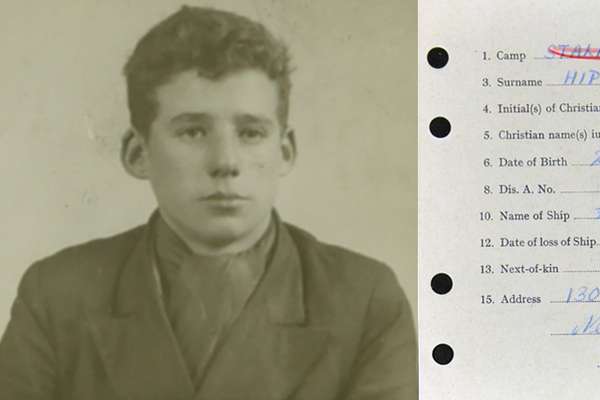
14-year-old cabin boy John Giles Hipkin became Britain's youngest Second World War prisoner of war in 1941 after he was captured at sea.
Series
Catalogue reference: HO 247
HO 247
Scope and ContentThis series consists of annual reports of the Borstal Association and Central After-Care Association, minutes of meetings of the Borstal Association, registers of borstal inmates and a random sample of personal files.
HO 247
1897-1977
This series consists of annual reports of the Borstal Association and Central After-Care Association, minutes of meetings of the Borstal Association, registers of borstal inmates and a random sample of personal files.
The numbers in the registers correspond with those of the case files with the exception of pieces 52-54 and 71. The registers date from 1928 and consequently do not cover the files in piece 71, and the files corresponding to the first two registers (pieces 52 and 53) have not been included in the sample.
See also PCOM 9
Public Record(s)
English
103 files and volumes
Subject to 30 year closure unless otherwise stated
After-care of borstal prisoners originated in the voluntary London Prison Visitors Association formed in 1901, which became the Borstal Association in 1904 when it transfered its attention from the major London prisons to Borstal Prison in Rochester where a new scheme for the reformation of young offenders had been introduced.
The object of the Association was the care of the prisoners discharged from Borstal, finding employment for them either in this country or in the colonies, assisting them with clothing, accommodation, tools, or whatever was considered necessary or helpful. An annual grant of £100 from the Prison Fund paid the salary and expenses of an agent whose duty was to interview each boy before discharge, report on his prospects and keep in close touch with him for as long as possible afterwards. Money for other salaries and expenses was met by subscription, or on an ad hoc basis by individual members of the Association.
When the Prevention of Crime Act 1908 established a statutory system of supervision, the Association was nominated by the Secretary of State to implement it, and it continued to hold this responsibility until 1949 when it merged with the Central Association, the National Association of Discharged Prisoners Aid Societies and the Aylesbury Association to form the Central After-Care Association. This was disbanded in 1966 when the after-care of prisoners of all ages became part of the responsibility of the probation service of the Home Office Prison Department.
Records created or inherited by the Home Office, Ministry of Home Security, and related...
Borstal Association, Central After-Care Association and Home Office Prison Department: After-Care of Young Offenders: Reports, Registers and Files
The story of
Record revealed
Record revealed
Records that share similar topics with this record.