Focus on
Emily Capper and the 1934 Gresford Colliery disaster
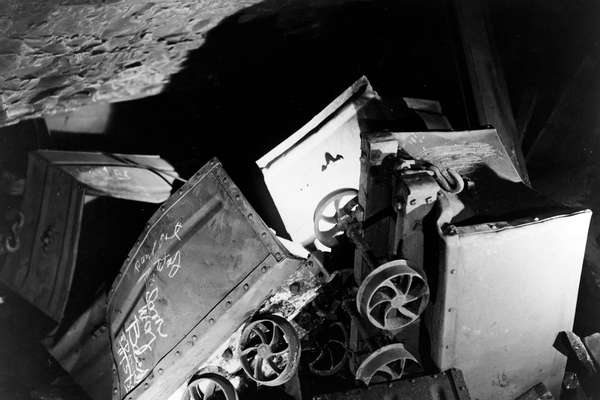
Our records tell the story of Emily Capper's desperate campaign to recover the bodies of the victims, including that of her son.
Series
Catalogue reference: HLG 89
HLG 89
The series includes policy and case files relating to mineral workings; the minerals aspects of town and country planning; the restoration and treatment of land used for mineral workings; the mineral aspects of development plans; supplies of...
The series includes policy and case files relating to mineral workings; the minerals aspects of town and country planning; the restoration and treatment of land used for mineral workings; the mineral aspects of development plans; supplies of minerals, including coal, chalk, sand and gravel; bricks; ironstone and the Ironstone Restoration Fund; and applications to work minerals. The series also contains minutes and papers of the Advisory Committee on Sand and Gravel, 1946 to 1953. Some files relate to specific locations.
See also BD 52
Some related files can be found in HLG 104
Some files from this series were re-registered into Department of the Environment series see:
From 1971 Department of the Environment
Mineral working first became subject to planning control "as an aspect of the control of land use" under the Town and Country Planning Act 1932, and the control operated in areas covered by planning schemes on a resolution to prepare a scheme. The Town and Country Planning Act 1943 extended this control and until the 1947 Act became operative various Orders were made involving certain modifications and restrictions.
The 1947 Act introduced a more effective means of control. After 1 July 1948, enforcement action could be taken against anyone who carried out any mining operations without planning permission. All mineral undertakers who had not already applied for planning permission or had obtained it before the 1943 Act came into operation, were required to apply for permission. Provided an application was made before 1 November 1948 (or in some cases, 1 January 1949), exsisting workings were given permission to continue until " a decision on the application was made", but this permission did not extend to new workings. Thus the general effect of the Act was to require permission to be obtained for new quarries and mines, and to cause all existing quarries and mines in the country to be reviewed by the planning authorities. The Minerals Working Act 1951 enabled the establishment of a fund for financing the restoration of land in England used for the working of ironstone by cast operations.
The series consists of general policy files of the Ministry of Town and Country Planning covering in the main, the period from 1945, and includes minutes and papers of the Advisory Committee on Sand and Gravel.
Ministry of Town and Country Planning and successors: Minerals, Registered Files (90,000 and M Series)
Read stories that share a catalogue subject with this record.
Focus on
Records that share similar topics with this record.