Record revealed
Copy of Henry VIII's diplomatic assurances to João III of Portugal
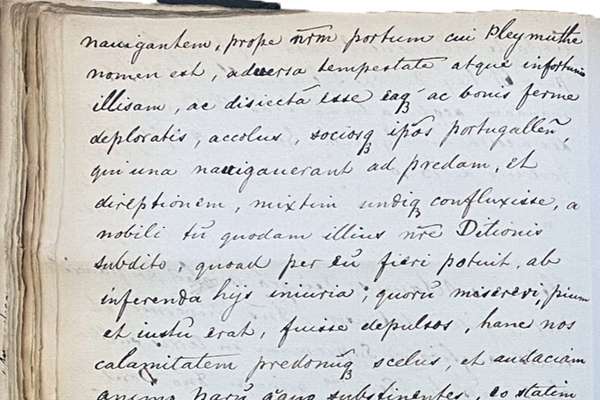
Recently rediscovered, this letter offers new archival evidence into Britain and Portugal's shared history.
Division
Catalogue reference: Division within J
Division within J
Records of the Restrictive Practices Court relating to jurisdiction on restrictive practice agreements.Case files are in J 154, court diaries in J 155, and court note books in J 163
Records of the Restrictive Practices Court relating to jurisdiction on restrictive practice agreements.
Case files are in J 154, court diaries in J 155, and court note books in J 163
The Restrictive Practices Court was established under the Restrictive Trade Practices Act 1956 as a superior court of record, enjoying the like powers, rights, privileges and authority as the High Court in England and Wales, the Court of Session in Scotland, and the High Court of Northern Ireland in Northern Ireland. The court consisted of three puisne judges of the High Court nominated by the Lord Chancellor, one judge of the Court of Session nominated by the Lord President of that court, and one judge of the Supreme Court of Northern Ireland nominated by the Lord Chief Justice of Northern Ireland.
Other persons qualified by virtue of knowledge of or experience in industry, commerce or public affairs could also be appointed members of the court by the crown on the recommendation of the Lord Chancellor. Under the Restrictive Practices Court Act 1976 the court consists of five nominated judges, as formerly, and not more than ten appointed members. Of the nominated judges one, selected by the Lord Chancellor, is president of the court.
By the Restrictive Trade Practices Act 1956 specified types of trading agreements were required to be registered with the registrar of restrictive trading agreements. The Restrictive Practices Court was asked to rule whether such agreements were against the public interest and, if so, to prohibit them.
A dispute as to the liability to registration of a trading agreement could be referred to the High Court for determination. Such applications, and others for the variation or removal of particulars included in the register of agreements, were assigned to the Chancery Division. Following the Restrictive Trade Practices Act 1968 jurisdiction in these matters passed to the Restrictive Practices Court. The various enactments relating to restrictive trade practices were later consolidated in the Restrictive Trade Practices Act 1976.
Earlier, the jurisdiction of the court had been extended by the Fair Trading Act 1973 which enabled the director general of fair trading to bring proceedings against a person carrying on a business who persisted in a course of conduct detrimental to the interests of consumers in the United Kingdom. By the same act the functions of the registrar of restrictive trading agreements were transferred to the director general of fair trading. The court was also empowered to make orders under the Resale Prices Act 1964, arising from applications for the exemption of goods from the prohibition on individual resale price maintenance agreements.
Appeals from decisions or orders of the Restrictive Practices Court in the case of proceedings in England and Wales lie to the Court of Appeal, in Scotland to the Court of Session, and in Northern Ireland to the Court of Appeal in Northern Ireland.
Records of the Restrictive Practices Court
Read stories that share a catalogue subject with this record.
Record revealed
Record revealed
Record revealed

Records that share similar topics with this record.