Focus on
The corsair state of Rabat-Salé

On the Atlantic coast of Morocco are two cities that became one of the most substantial Islamic ports of the 17th Century.
Series
Catalogue reference: E 357
E 357
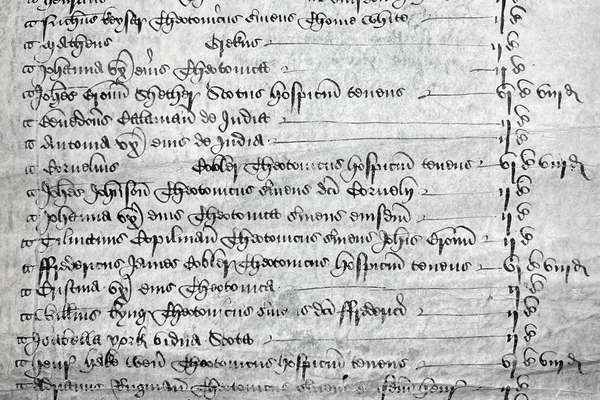
This series consists of Exchequer, Pipe Office, escheators' accounts.It contains the audited rolls made up by the Pipe office from the accounts sent in by the escheators who were charged with investigations into, and the management of, lands...
This series consists of Exchequer, Pipe Office, escheators' accounts.
It contains the audited rolls made up by the Pipe office from the accounts sent in by the escheators who were charged with investigations into, and the management of, lands which had fallen into Crown hands. The escheated lands include the temporalities of bishops and religious houses during vacancies, land confiscated from criminals, rebels and traitors, and the estates of deceased lay tenants in chief of the Crown.The accounts give the location and amount of land yielding revenue for the Crown. Sometimes the circumstances which caused the estate to fall into Crown hands is noted. Details of goods and chattels seized from outlaws and felons are often included, and so are any expenses the escheator incurred on his business.
For Durham escheator's accounts see
Accounts of escheats before 1324 are in E 372 DURH 20/106 DURH 20/107
The escheator's duties were to maintain the king's rights as overlord of all land held by tenants in chief, which reverted to him on the death of such a tenant. It was the escheator's job to enquire into land of doubtful status, and to administer land over which the king had rights. He could do this either on his own initiative or on the authority of a writ of diem clausit extremum sent to him by the Chancery. He would then hold an inquisition post mortem, at which local jurors would determine the extent of the estate and identify the next heir. The inquisition was then returned to the Chancery and filed.
If the heir was of age, Chancery would then authorize the escheator to release the land to the heir as the new tenant-in-chief when the heir had paid due homage to the King for it. If the male heir was a minor, the escheator would produce an extent of the land for the purposes of granting wardship of the minor, or for division between surviving heiresses. The escheator might also be required to assign dower, the third of the estate which the deceased's widow was guaranteed as part of her marriage contract. When land was held by an ecclesiastical tenant, for example a bishop or abbey, the king was entitled to the custody of that land and its revenues when it fell vacant. Vacancies occured between the death of one bishop, abbot or prior, and the admission of the next person, and could last for a year or more. In addition, the escheator was entitled to enquire into the transfer of land from laymen to the church, which was an undying corporation. These grants of land were therefore known as 'in mortmain' because they were considered to be passing into the 'dead hand' of the church. Forfeited land, confiscated from rebels and criminals, also formed part of the escheator's responsibilities.
In 1232 two escheators were appointed to control escheated revenue. One was given control of the counties south of the Trent and the other control of counties north of it. Under them in each county were the sheriffs and deputy escheators.
In 1323, following the Exchequer reorganisation ordered by the Cowick Ordinance, the escheatries became nine county groups, rather than the previous two divisions. The Cowick Ordinance of 1323 ordered that because of the increasing volume of information being enrolled on the Pipe Rolls, 'foreign' accounts, including those of the escheators, should be enrolled separately. The earliest individually enrolled escheators' accounts roll dates from then. After the fall of the Despenser regime and Edward II's deposition, the regime of Isabella and Mortimer reverted to the north and south division. This continued until 1335, when Edward III abandoned the bi-partite division in favour of county groupings. Finally, in 1341 the escheatries were based on counties. This was initially done by giving the sheriffs themselves the post of escheator in their counties, but after a few years separate escheators were appointed in each.
Exchequer: Pipe Office: Escheators' Accounts Rolls
Read stories that share a catalogue subject with this record.
Focus on
Record revealed
Record revealed
Records that share similar topics with this record.