Record revealed
Request for compensation for the Boston Tea Party
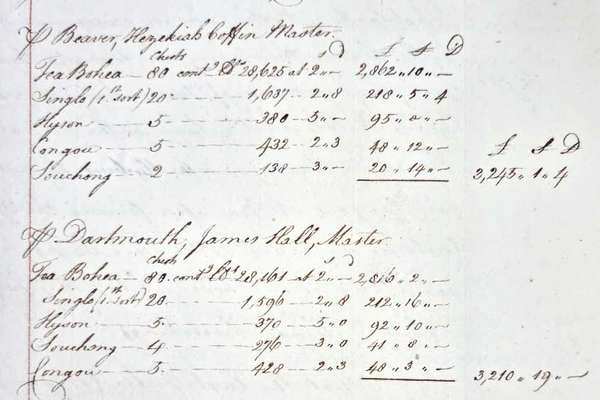
On 16 December 1773, 340 chests of tea were thrown into Boston harbour by protesting colonists. This letter from the East India Company requests reimbursement.
Series
Catalogue reference: E 103
E 103
This series consists of affidavits in equity and revenue causes in the Exchequer. Until 1841 it contains affidavits in both equity and revenue suits. After 1841, and the abolition of the equity jurisdiction of the Exchequer, it contains revenue...
This series consists of affidavits in equity and revenue causes in the Exchequer. Until 1841 it contains affidavits in both equity and revenue suits. After 1841, and the abolition of the equity jurisdiction of the Exchequer, it contains revenue matter alone.
The affidavits were headed with the name of the court and the title of the suit, that is, of the plaintiff(s) and defendant(s) in the action, and signed by both the person making the affidavit and the person before whom it was taken.
While the majority are procedural, some affidavits supplement or explain information given in the formal pleadings or prove exhibits by stating, for example, the circumstances under which a particular deed was made. Most affidavits after 1841 relate to actions brought by the solicitors for the Inland Revenue or the Post Office.
Affidavits can be a rich source for social, economic, and family history, but are not readily accessible.
The affidavits are filed by term, and, until 1843, are not indexed, the means of reference being a simple date list.
From 1875 the affidavits are those filed in the Exchequer Division of the High Court, under the Supreme Court of Judicature Act 1873. From 1881 they are those filed in the King's Remembrancer's Office of the King's (Queen's) Bench division of the Supreme Court of Judicature.
Exchequer and Supreme Court of Judicature: King's Remembrancer: Affidavits
Read stories that share a catalogue subject with this record.
Record revealed
Focus on
Record revealed
Records that share similar topics with this record.