Record revealed
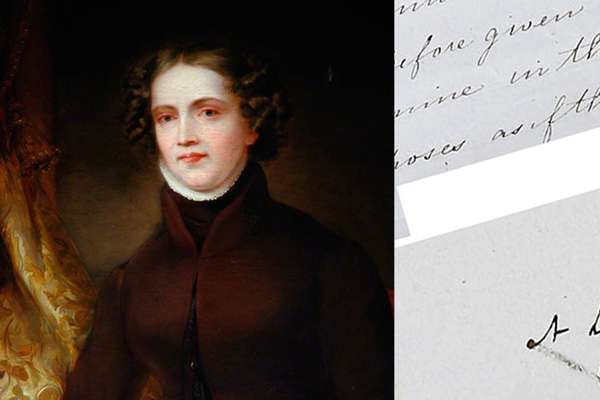
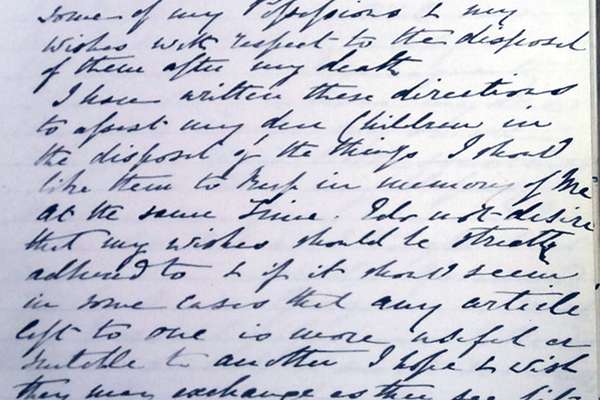
Jane Austen’s will

Explore Jane Austen's will, in her own handwriting, which shows how the novelist planned to share her belongings with family and friends after her death.
Division
Catalogue reference: Division within C
Division within C
Records of the Registrars' Office, including some of the Examiners' Office.The registrars' principal records are the entry books of decrees and orders in C 33Related registers are in C 37 (registrars' court or minute books) and C 41 (registers of...
Records of the Registrars' Office, including some of the Examiners' Office.
The registrars' principal records are the entry books of decrees and orders in C 33
Related registers are in C 37 (registrars' court or minute books) and C 41 (registers of affidavits).
Ordinary and appeal petitions are in C 36. Exceptions to reports, etc, are in C 40. Awards and agreements are in C 42
Docquets of enrolled decrees are in C 96. Copy wills and probates, and administrations, are in C 100
Orders of court and related documents are in C 240. Miscellaneous papers are in C 48
Papers of the Examiners' Office are in C 98, with town depositions in C 24, and interrogatories in C 25
Until 1534 decrees and orders in the court of Chancery were recorded, if anywhere, on the dorses of the bills and other pleadings of the causes to which they refer, although it may be that officers of the court maintained working registers which have not survived. Certainly from that date, however, decree rolls were compiled and additionally, from 1544, entry books of decrees and orders. Although these books are invaluable, and provide (until 1833) the fullest summary of the causes, as well as the bulk of decrees and orders, the enrolments (though for Chancery purposes more authoritative) were made far less frequently, and mostly only in land causes.
The register or registrar was the officer detailed to take note of all decrees and orders of the court, to draft and engross them, and to enter them in registers; he was also to provide litigants and others with copies of decrees, orders, and affidavits. Although the early history of the office is unclear, there was a registrar from Henry V's reign onwards, and by the early sixteenth century there were two registrars, one appointed by the chancellor and one by the master of the rolls.
The bureaucratic changes of 1534 suggest that the office was consolidating its status and increasing its responsibilities; in 1549, possibly in response to this, the Crown took the appointments into its own hands, and thereafter appointed a single registrar, supported by two deputies (later increased to four). It was the deputies who noted down the details in court, even when the registrar was present, and by the seventeenth century this system was sufficiently established for its duties, like so many others, to be carried out solely by the deputies and their under-clerks; at one time Nell Gwynne seems to have been the registrar. In 1740 there was one 'register' and a variable number of deputies, and by the time of Chancery's absorption into the Supreme Court in 1875 there were twelve registrars with a total of twenty-seven clerks and assistant clerks under them.
Because a suit in Chancery might involve numerous decrees and orders before the causes were finally determined, the work of the registrars was central to the expeditious procedure of a cause; until a decree or order had been entered, subsequent process was delayed. The registrars, accordingly, had control of the cause list, and their manipulation of the list, by advancing some causes and retarding others in response to bribes, was a tolerated public scandal from the sixteenth century to the later eighteenth century.
Within the registrars' office, a separate office (later known as the Report Office) developed for the filing of reports and certificates made by the masters in Chancery, which by custom were transferred on the first day of the Michaelmas term, together with (from the reign of Henry VIII onwards) the entry books of decrees and orders. This office also kept accounts of all moneys, funds, and effects belonging to suitors of the court.
The role of the examinerIn the course of Chancery equity suits, witness statements were normally required. In the fifteenth century, and possibly later, witnesses might be examined in court, but written testimony was common from the first, and quickly became the norm; by 1737 oral testimony was regarded as improper. By the early sixteenth century, a permanent examiner was in office to take the depositions of witnesses, assisted from the 1530s by another. Their responsibility was, however, restricted to a twenty mile zone around London. Elsewhere, 'country depositions' were taken before special commissioners appointed for the purpose.
There was at times much complaint that the interrogatories had become so complex and subtle that witnesses were having to be led, coached, or instructed how to answer, which did little for the reliability of the final depositions, especially as there were frequent allegations that an examiner might be open to bribery. The procedure, however, remained substantially unreformed throughout its history, and in 1875 the examiners, with a supplementary staff of clerks, were transferred to the Supreme Court.
Records created, acquired, and inherited by Chancery, and also of the Wardrobe, Royal...
Records of Equity Side: Registrars' Office
Record revealed
The story of
Record revealed
Records that share similar topics with this record.