The story of
Maud Allan
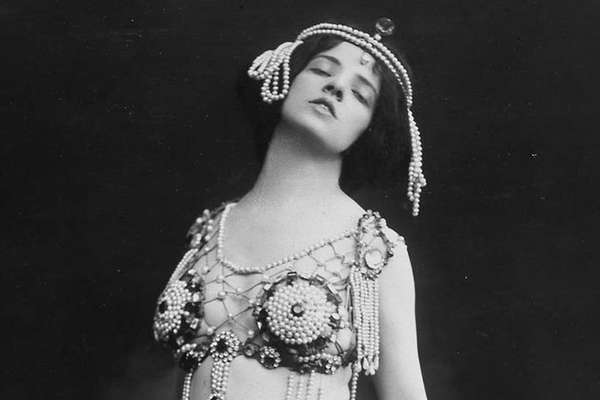
Maud Allan (1873–1956) was a celebrated West End dancer in the early 20th century until she became entangled in one of the most sensational trials of the 1920s.
Series
Catalogue reference: CP 18
CP 18
Declarations in ejectment were drawn up by claimants in suits in the Court of Common Pleas, swearing that the tenants of the property in question or their wives had been served with copies of the declaration and had had it read over to them.From...
Declarations in ejectment were drawn up by claimants in suits in the Court of Common Pleas, swearing that the tenants of the property in question or their wives had been served with copies of the declaration and had had it read over to them.
From 1774 to 1830 both declarations in ejectment and the consequent consent rules in ejectment (otherwise in CP 46) are included, but earlier and later they include only the declarations, to which affidavits of service, testifying that the declaration has been served on the real defendant, are usually annexed. The declarations themselves are often printed forms.
Rough indexes to the declarations covering the years from 1728 to 1749, 1771 to 1809, and 1815 to 1837, are respectively in IND 1/9959 IND 1/9960 IND 1/9961
Declarations in ejectment were drawn up by the claimant, often on printed forms with the particular details filled in, and with affidavits of service, swearing that the tenants or their wives had been served with copies of the declaration and had had it read over to them where possible, annexed. The affidavits were sworn either before a judge in London or a commissioner for oaths in the country, and rules were developed as to what they should contain. Each declaration was at the suit of a nominal, fictitious, plaintiff, latterly normally John Doe, against a nominal, fictitious, defendant, often Richard Roe, called the 'casual ejector', and stated that the premises, whose location had to be clearly given, had been leased to Doe by the real plaintiff bringing the action, Doe then having been ejected by Roe.
The declaration served in place of a writ, and at its foot it included a notice to the actual possessor (or possessors) of the property from Roe, requiring him (or them) to appear in court at a stated date in the following term to be made the defendant instead of him. Elaborate rules developed as to what constituted a valid serving of the declaration to the real defendant. If he did appear in court he had to agree to a 'consent rule', which obliged him to accept the fictions and enter a plea of not guilty, upon which an entry was made in the appearance book. If he failed to appear, judgment was entered against him by default. The affidavits and copy declarations served the purpose of briefs to counsel to move for judgment. In the earlier of the surviving declarations John Doe and Richard Roe appear more often as pledges for prosecution than as plaintiff and defendant, and there are other fictional litigants like Thomas Notitle and John Goodright, but later Doe and Roe invariably appear in those roles.
Court of Common Pleas: Declarations and Consent Rules in Ejectment
Read stories that share a catalogue subject with this record.
The story of
The story of
Records that share similar topics with this record.