Record revealed
Accident register for the North Eastern Railway Company
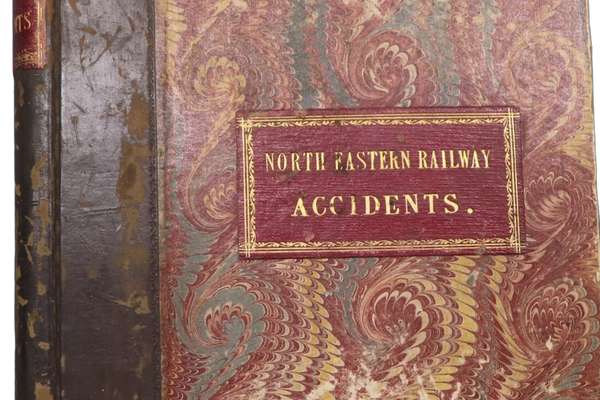
These record books reveal the substantial dangers to passengers – and for those operating trains – in the first decades that public railways existed.
Series
Catalogue reference: C 135
C 135
The fourth series of inquisitions post mortem in Series I, dating to the reign of Edward III.The size of the series reflects both the length of Edward III's reign and the great mortality caused by the Black Death. From the mid-1340s, the returns...
The fourth series of inquisitions post mortem in Series I, dating to the reign of Edward III.
The size of the series reflects both the length of Edward III's reign and the great mortality caused by the Black Death. From the mid-1340s, the returns of the inquisitions habitually include the date of death of the late tenant. Returns drawn up in the form of an indenture first appear in the 1360s.
Each file is usually made up of the documentation of inquisitions post mortem following the deaths of about twenty persons. The actual number of inquisitions in each file is likely to be rather greater than twenty, given that a tenant might well have held lands in more than one county, in which case separate inquisitions were required to be conducted in each shire concerned. The series is arranged, as far as possible, in chronological order.
Inquisitions made upon the lands of particularly wealthy magnates may take up several files on their own.
Accounts submitted to the Exchequer by the escheators are in E 136
Copies of inquisitions post mortem sent to the Exchequer are in
From 1341 the two posts of escheator north and south of the Trent lapsed, never to be re-established. Responsibility for escheats thereafter devolved almost entirely upon the former sub-escheators, with some more problematic cases entrusted to commissioners appointed ad hoc by letters variously issued under the great seal, privy seal and signet, or by writ of mandamus.
From 1368 the escheators became subject to certain qualifications: they were required to be landholders in the county of their office, having £20 of land in fee, and were supposed to hold their post for one year only.
Examples of types of writ which seem to make their first appearance during Edward III's reign include (que) plura- '(which) other things' - which required the holding of a further inquisition on the grounds that Chancery knew that certain properties had not been covered by the original return; precipimus- 'we order' - used in cases where it was believed that the tenant had not died recently; de non intromittendo- 'concerning not intermeddling' - which instructed the escheator to withdraw from interfering with lands which were not held of the crown in chief; and sicut alias- 'as at another time' - sent to an escheator as a reminder when it appeared to Chancery that an earlier writ had not been acted upon.
Chancery: Inquisitions Post Mortem, Series I, Edward III
Read stories that share a catalogue subject with this record.
Record revealed
Record revealed
Focus on
Records that share similar topics with this record.