Record revealed
Copy of Henry VIII's diplomatic assurances to João III of Portugal
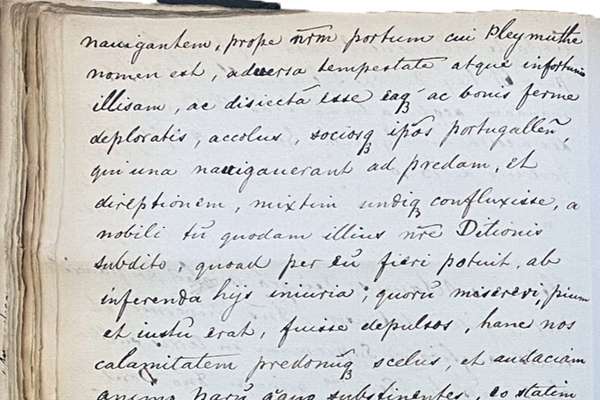
Recently rediscovered, this letter offers new archival evidence into Britain and Portugal's shared history.
Series
Catalogue reference: C 81
C 81
These warrants are writs, bills or letters, nearly all on parchment, giving the lord chancellor, as keeper of the great seal, authority to affix the great seal to them to solemnise the Crown's wishes. Royal commands were expressed, if not...
These warrants are writs, bills or letters, nearly all on parchment, giving the lord chancellor, as keeper of the great seal, authority to affix the great seal to them to solemnise the Crown's wishes.
Royal commands were expressed, if not verbally, chiefly through the privy seal or smaller seals, later through the signet, and subsequently by signed bill, using the sign manual. Privy seal writs, mere strips of parchment, are much more numerous than letters and 'bills', which are a later, but equally formal, development of warrants from the early fourteenth century.
There are also warrants issued by regents, royal councils and military commanders, and by royal ministers such as treasurers, whether of England or of the royal household, as well as other household officials. Many of these instruments were enrolled in the patent, close, fine, Gascon, liberate, pardon, redisseisin, Scotch, treaty or exchange rolls, and the latter, many of them published, supply dates for undated material among the warrants.
The records are nearly all bound in files. Each parchment warrant has a number stamped on the back. In some files a pencil foliation has been made on the face of the warrant. The rearrangement or later insertion of documents is usually detectable from the use of suffixes A and B after stamped document numbers.
The documents are arranged by category, and not in one chronological run: privy seal warrants; signet or small seals; signed bills and other direct warrants; regents' and council warrants; treasurers' warrants; household officers warrants; warrants arranged under successive Chancellors' names; and so on.
See also the Special Collections, Ancient Petitions, in: SC 8
Privy Seal Office records after 1386 which survived the Whitehall fire of 1619 are in: PSO 1
Records of the Signet Office are in: SO
In 1311 the importance of the privy seal led the lords ordainer to remove it from the wardrobe and place it in the care of its own keeper. The first in the series of keepers of the privy seal can be identified in 1312. The Privy Seal Office now developed as the third great department of state, but although it had its own headquarters in London the keeper continued to attend the king until the middle of the fifteenth century, when the king's secretary emerged as an influential member of the royal administration.
The privy seal became one of the necessary steps in the ordinary method of passing an instrument under the great seal. Some Privy Council ordinances of the reign of Henry VI laid down that 'all bills when the king of his good grace hath granted them be delivered to his secretary and letters to be conceived upon them directed under the signet to the keeper of the privy seal and from thence under the privy seal to the chancellor of England'. This was the procedure for the most important purposes in which the great seal was employed, and first received parliamentary authority by an act of 1535.
As a consequence of the Walton Ordinances in 1338 the Exchequer would accept only great or privy seal warrants as authority for expenditure, either by itself or by accounting departments. The Privy Seal Office retained the function the seal had exercised in the wardrobe of being used in the conclusion of indentures for military service.
Chancery: Warrants for the Great Seal, Series I
Read stories that share a catalogue subject with this record.
Record revealed
Record revealed
Record revealed

Records that share similar topics with this record.