The story of
Mary II’s love letters to William III
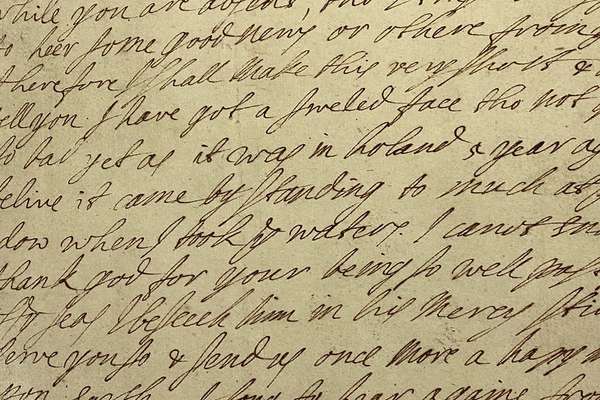
Buried among a collection of official documents curated by William III are an unusual find: expressions of love.
Series
Catalogue reference: C 57
C 57
Coronation Rolls are the formal, official and legal state records of coronation proceedings, drawn up by the Clerk of the Crown. The earliest roll is for Edward II. There are no rolls for Edward III, Henry VI, Edward IV, Richard III, Henry VII,...
Coronation Rolls are the formal, official and legal state records of coronation proceedings, drawn up by the Clerk of the Crown.
The earliest roll is for Edward II. There are no rolls for Edward III, Henry VI, Edward IV, Richard III, Henry VII, Henry VIII, Edward VI, Mary, Elizabeth I, Charles I or George III.
From the early seventeenth century, these rolls provide a record of the accession of the sovereign, followed by a proclamation of the coronation and of the peers' attendance, the appointment of the Court of Claims and the petitions to it (in full) with their answers, a short account of the ceremony with the services performed, and a list by rank of those doing homage.
Each roll includes a recital of claims made to perform services at coronations, and adjudications made on these claims by a Court of Claims set up ad hoc to examine them.
From 1702 the oath sworn by the sovereign is included as a schedule, and except in the case of George IV, this is signed. Declarations against the transubstantiation of the sacrament and the archbishop of Canterbury's certificate are included from 1714 onwards.
From 1685 the rolls end with a memorandum of their transfer to the custody of the Keeper of the Rolls.
The languages used vary: earlier rolls are in Latin and French, with English used from the seventeenth century onwards.
Court of Claims minutes for the twentieth century are in PC 10
There are copies of older coronation claims in SP 9
Early royal coronation records point to the evolution of an ad hoc Court of Claims to decide on the entitlement of claimants to perform services at the coronation ceremony. Most claimants are entitled by hereditary title, personal or tenurial grounds. However, the court is not bound by precedent.
The court was convened by the Clerk of the Crown and its proceedings enrolled on the Coronation Roll.
For Charles III?s coronation, no Court of Claims was convened. Instead, a Coronation Claims Office was created within the Cabinet Office to consider claims to perform an historic or ceremonial role. The Clerk of the Crown created the Coronation Roll for Charles III with the support of the Major Events Division in the Cabinet Office.
Chancery and successors: Crown Office: Coronation Rolls
Read stories that share a catalogue subject with this record.
The story of
The story of

Record revealed

Records that share similar topics with this record.