Focus on
Henry Savage Sweetman: the man who uncovered Ireland’s medieval history

Henry Savage Sweetman published the Calendar which translated over 8,000 Irish medieval records. But who was Sweetman and why did he complete this project?
Series
Catalogue reference: C 1
C 1
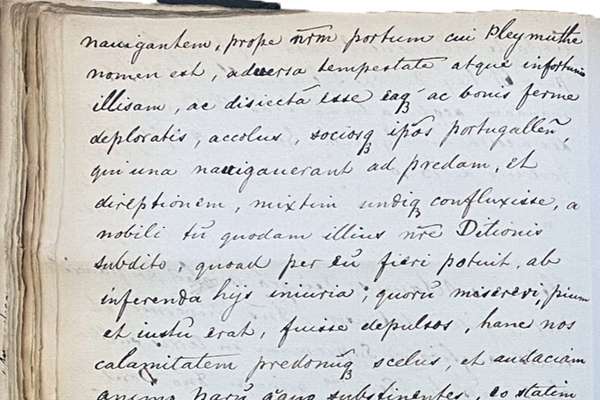
Pleadings, interrogatories, depositions and exhibits relating to equity causes initiated in the court of Chancery up to 1558. The records consist solely of bills of complaint until the mid-fifteenth century, but subsequently there are also...
Pleadings, interrogatories, depositions and exhibits relating to equity causes initiated in the court of Chancery up to 1558.
The records consist solely of bills of complaint until the mid-fifteenth century, but subsequently there are also answers, interrogatories and depositions.
Please be aware that the full range of documents (if pleadings proceeded so far) are not always filed together: you may need to search further within C 1 and C 4 using variant spellings of names and places to find related pleadings brought into court slightly later and not filed with the bill.
Some bills are endorsed with decrees or orders, the only source of information about the outcome of cases before 1534.
After about 1534, it is worth looking in the separate series of depositions in C 21 and C 24, which are catalogued by the short title. After 1544, try the decree and order books in C 33.
The matters in dispute are extremely varied because, unlike in the common law courts, there were no fixed actions.
Digital images of some of the records in this series are available through the Anglo-American Legal Tradition website. Please note that The National Archives is not responsible for this website or its content.
The records are no longer in their original arrangement and may have been brought together from at least four overlapping series.
The documents are now arranged in chronological order by chancellor as far as possible, and within that by the first letter of the first plaintiff's surname.
The data here is taken from the published listings, which vary in how they numbered the records. Some run consecutively, with one number covering a whole [small] file of records in a single suit. Others use a numbering system where every record received a number, even if strung on a file, but only the first number was used in creating the listing. This can give the impression that not all suits have been catalogued. So, if a single suit comprised 3 membranes, it will be listed against, for example, no 1, and the next case will be listed against no 4, with membranes 2 and 3 being silently included in the description for 1. Many of these now [from 2013] have the number of dcouments included in the description, to indicate that there is no gap. Another of the numbering systems in use for C 1 would treat a similar case by numbering it 1-3.
The listing was reworked in 2012 to provide a short title for each cause and to improve searchability by extending abbreviations and replacing a wide variety of markings for lacunae with [unknown].
In addition, the opportunity was taken to add four codes to help researchers identify causes brought by different types of litigant, as follows:
These codes can of course be used with other search terms.
Detached pleadings may perhaps be found in
Court of Chancery: Six Clerks Office: Early Pleadings and Proceedings, Richard II to Philip and Mary
Read stories that share a catalogue subject with this record.
Focus on
Record revealed
Record revealed
Records that share similar topics with this record.