The story of
Jayaben Desai and the Grunwick dispute

In August 1976, a group of migrant workers led by Jayaben Desai took a historic stand against racism, low pay and limited workers’ rights.
Series
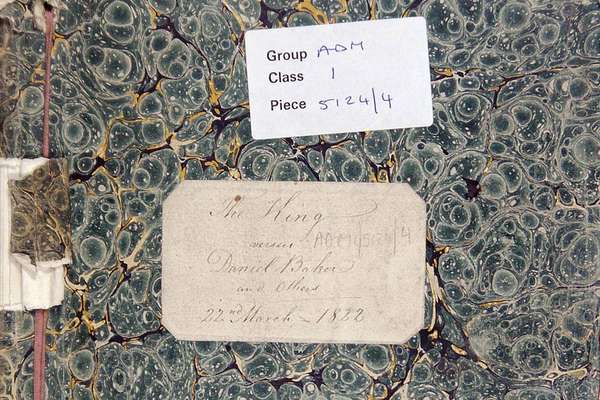
Catalogue reference: ADM 174
ADM 174
Entry books of correspondence, warrants, minutes, orders, instructions and miscellaneous papers and plans concerning Plymouth Dockyard, including records of the Royal William Victualling Yard.
Entry books of correspondence, warrants, minutes, orders, instructions and miscellaneous papers and plans concerning Plymouth Dockyard, including records of the Royal William Victualling Yard.
The increasing importance of naval operations in the Western Approaches during the War of the Spanish Succession led to the decision to found a new dockyard further west than Portsmouth. A site was ultimately chosen at Point Froward, in the parish of Stoke Damerel, Devon, on the eastern shore of the Hamoaze, which forms the estuary of the rivers Tavy, Tamar and Lynher and which issues through the Cremyll Passage into the head of Plymouth Sound.
Work began in 1691 on what was named Plymouth Dock, though it should be noted that it lies about four miles west of Plymouth itself and is separated from it by the inlet of Stonehouse Lake. Plymouth Dock should not be confused with the harbour of Plymouth, Sutton Pool, (also used by the Navy in the late seventeenth century) which opens into Cattewater, forming the estuary of the river Plym to the east of the city.
In its earliest form Plymouth Dock consisted of a graving dock opening into a wet basin with storehouses and a ropewalk adjacent, but almost as soon as it was completed extensions were undertaken and further work at intervals during the eighteenth century progressively expanded the yard both north and south.
In 1718 the Ordnance Office, formerly at Sutton Pool, removed to a new Gunwharf immediately to the north of the yard. In 1760 a naval hospital was built at Stonehouse where the Marine barracks were already established. The town was officially renamed Devonport in 1824 though the Admiralty did not adopt the new name for the dockyard until 1843.
In 1834 the victualling establishment, formerly dispersed, was moved to the new Royal William Victualling Yard at Stonehouse. The need for new facilities for steam engineering, which could not be provided in a crowded yard by now surrounded by water fortifications and the towns of Devonport and Stonehouse, led to the establishment in 1845 of a 'Steam Factory' at Keyham, north of the yard, and separated from it by the Gunwharf and the streets of Devonport leading down to the Torpoint Ferry.
When completed in 1859 the Steam Factory was connected to the old yard by a tunnel three quarters of a mile long. Keyham Yard was expanded inland on a site acquired in the 1870s (sometimes known as Goschen Yard after the then First Lord) and more than doubled its size by a further extension northwards made under the provisions of the Dockyard Works Act 1896 on land reclaimed from the Weston Mill Lake. The yard today consists of three parts, the South Yard (the original Plymouth Dock), Morice Yard (the old Gunwharf) and North Yard (formerly the Keyham Steam Factory), which together occupy almost the whole eastern shore of the Hamoaze from Mutton Cove to the Royal Albert Bridge.
The records consist of correspondence between the Navy Board and the Commissioners of the yard, and after 1832 between the Admiralty and the Admiral Superintendent, together with reports by the senior officers of the yard to the Commissioner or Superintendent, orders of the Commissioners and Superintendents and other papers. They include a few records properly belonging to other yards but brought to Devonport by dockyard officials transferred from other posts.
Navy Board and Admiralty: Plymouth Dockyard: Correspondence and Papers
Read stories that share a catalogue subject with this record.
The story of
Focus on
Record revealed
Records that share similar topics with this record.