The story of
Jayaben Desai and the Grunwick dispute

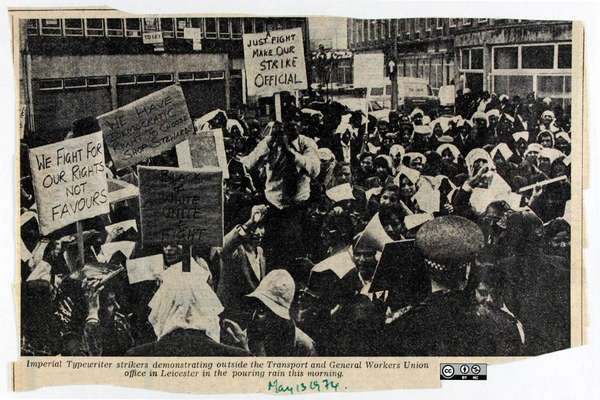
In August 1976, a group of migrant workers led by Jayaben Desai took a historic stand against racism, low pay and limited workers’ rights.
Series
Catalogue reference: MINT 43
MINT 43
The records in this series comprise digitised paper files from the Quinquennial Series 8. Manufacture and supply of coins, medals, seals and similar articles. 1997 introduction of smaller 50p coin. Euro research discussions on single Euro...
MINT 43
1997-2001
The records in this series comprise digitised paper files from the Quinquennial Series 8.
Manufacture and supply of coins, medals, seals and similar articles. 1997 introduction of smaller 50p coin. Euro research discussions on single Euro currency 1997. 1998 introduction of new £2 coin, new Queen portrait design by Ian Rank-Broadley. Operational Service Medal design 2000.
References for born-digital records are automatically generated and display a 'Z' after a forward slash, which distinguish them from traditional references allocated to paper and digitised records. Records in this series were transferred with born-digital referencing because they had been digitised for business use before transfer took place.
Public Record(s)
English
103 digital record(s)
Open
In 2021 Royal Mint
The records were stored in the Royal Mint facility in Llantrisant, Wales. The records information had to be digitised after a fire at this facility in 2008 smoke-damaged the files. The paper records were destroyed. These records were digitised by the department for business purposes, subsequently used digitally and later transferred to The National Archives as born-digital records.
No further accruals are anticipated.
OSP22 - The Records of the Royal Mint - 1975-2000. Selection criteria and topics covered in these files are described in 'OSP22 - The Records of the Royal Mint, 1975 - 2000', Table 2. However, the files codes in Table 2 only extends from 1972 to 1991; a new set of registry file codes covering file series 7 to 9 (inclusive) which seem not to have changed to tri-annual, was introduced from 1992 to 2001.
Her Majesty's Treasury ('HM Treasury') owns 100% of the shares of The Royal Mint Limited through an Executive Agency, the Royal Mint Trading Fund. The Chancellor of the Exchequer is the Master of the Mint and the Chief Executive Officer the Deputy Master.
The legislative framework is provided by the Coinage Act 1971 and Royal Proclamations. The Royal Mint became a trading fund 1st April 1975 under the Royal Mint Trading Fund Order 1975 and then Executive Agency 1st April 1990 under the initiative announced by the Prime Minister in February 1988.
From 1997 to 2001, the Royal Mint was arranged organisationally into the following business units: Office of the Master of the Mint (Chancellor of the Exchequer); Chief Executive; Circulating Coin Production Director, Sales Director, Human Resources and Corporate Affairs Director, Finance Director and Collector Coin Director.
Records of the Royal Mint
Royal Mint: Quinquennial Series 8: Digitised Paper Files
The story of
The story of
Records that share similar topics with this record.