Focus on
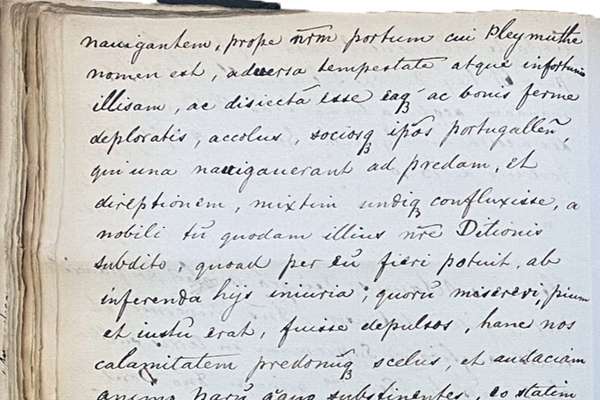
Henry Savage Sweetman: the man who uncovered Ireland’s medieval history

Henry Savage Sweetman published the Calendar which translated over 8,000 Irish medieval records. But who was Sweetman and why did he complete this project?
Series
Catalogue reference: RW 3
RW 3
The records comprise Rolls of Admissions for Solicitors and Attorneys that were gifted from the Law Society to The National Archives in June 2006. They fill gaps in the Solicitors Admission Rolls that have been accessioned into record series KB...
The records comprise Rolls of Admissions for Solicitors and Attorneys that were gifted from the Law Society to The National Archives in June 2006. They fill gaps in the Solicitors Admission Rolls that have been accessioned into record series KB 105, KB 106and KB 107 (for years 1836 to 1840); C 216 (for years 1858 to 1875); Lancaster Rolls (1790 to 1860); and, J 89 (records from 1875 to 1884).
The records are arranged by year and then alphabetically by surname
In 1823, several prominent attorneys met to call for the formation of 'The London Law Institution' to raise the reputation of the profession by setting standards and ensuring good practice. This would be housed near the Inns of Court. By 1825 the term 'London' was dropped from the title to reflect the Institution's national aspirations.
The Society was founded on 2 June 1825, when a committee of management was appointed. The Society acquired its first royal charter in 1831, and opened a new building in Chancery Lane in 1832. A new Royal Charter in 1845 defined the Society as an independent, private body servicing the affairs of the profession like other professional, literary and scientific bodies.
The organisation became known colloquially as the Law Society although its first formal title was 'The Society of Attorneys, Solicitors, Proctors and others not being Barristers, practising in the Courts of Law and Equity of the United Kingdom'. In 1903 the Society changed its official name to 'The Law Society'.
Women were first admitted as solicitors in 1922 and today account for over half the admissions to the profession.
Over the years, the ruling Council of elected office holders and members has grown in size. Seats have been created to reflect the composition and interests of the members.
Discipline - In 1834, the Society first initiated proceedings against dishonest practitioners. By 1907, the Society possessed a statutory disciplinary committee, and was empowered to investigate solicitors' accounts and to issue annual practising certificates.
Admission and continuing professional development - Lectures have been delivered in the Law Society's Hall since 1835. Better legal education was essential to improve the status of the profession. The Solicitors Act of 1860 enabled the Society to create a three-tier examination system. In 1903, the Society established its own school of law, which later became the independent College of Law. By 1922, a compulsory academic year was required for clerks.
The Society's representational role was a strong one from the beginning. The scrutiny of legislation and lobbying with the aid of solicitor MPs enabled the Society to develop a special relationship with government on law reform and the formulation of legal policy. The Law Society was determined to ensure that the Royal Courts of Justice were built close to the London headquarters.
In the prospectus of 1823, the Society promised a library and a dining club.
A registry for articled clerks, now Law Society Recruitment, was opened in 1832. Communications were much improved by the publication of the Law Society's Gazette from 1903.
The Petty Bag Office was a component of Chancery and is likely to have dated as an institution from the late fourteenth century. It was known that from this time common law courts listed on their rolls the names of approved attorneys. The courts have always maintained strict control of attorneys and their profession. The Petty Bag Office was known to record the names of solicitors in Chancery from the sixteenth century. It passed over these duties to the Law Society in 1845. Further duties were gradually eroded until the Supreme Court of Judicature (Officers) Act 1879 provided for its abolition at the next vacancy. This took effect in 1889.
Law Society: Solicitors Registers of Admission
Read stories that share a catalogue subject with this record.
Focus on
Record revealed
Record revealed

Records that share similar topics with this record.