Record revealed
Copy of Henry VIII's diplomatic assurances to João III of Portugal
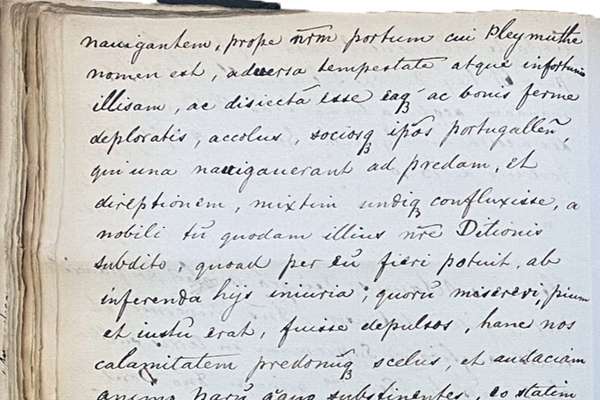
Recently rediscovered, this letter offers new archival evidence into Britain and Portugal's shared history.
Sub-sub-fonds
Catalogue reference: POST 104
This record is about the Post Office: Telegrams: Forms and Delivery dating from 1840-1992.
Maybe, but not on The National Archives website. This record is held at The Postal Museum. How to view it.
Not at The National Archives, but you may be able to view it in person at The Postal Museum. How to view it.
This records in this series cover general telegrams, greetings telegrams, forces telegrams, the Telemessage Service, the Overseas Radio and Telecommunications Branch, the rules and procedures, material used for exhibitions, press cuttings and history.
Please see The Postal Museum's online catalogue for descriptions of individual records within this series.
Over the centuries there have been hundreds of different ways that messages have been carried and sent. Typeprinting of telegraphs was established in Europe by the early 1830s and in 1889 an English model of a teleprinting machine was introduced to the Post Office by (Mr) Hughes.
By 1913 the Post Office was looking at ways of improving the speed of its operation and it was not long before the 'Teleprinter' was introduced by Creed. This machine possessed a typewriter keyboard and could be operated to approximately sixty five words a minute. This machine printed the Telegram ready for delivery. This was a great boost to the efficiency of the system. It was adopted by the Post Office and used by its telegraph services.
The Post Office wanted to encourage the use of the Telegraph and in the early days reduced rates and employed more operators in order to reduce delay. They improved the working areas, and introduced motor cycles to speed up delivery. By the 1930s they were introducing beautifully decorated Greeting cards for sending on special occasions. These continued until the late 1960s when the numbers being sent reduced.
In the early 1980s and through to the 1990s there was liaison with British Telecom in order to introduce a 'Telemessage Service'. This was similar to the Greetings Telegram and a variety of designs were produced for various events like 'Weddings', '21st Birthday' and 'New Arrival'.
Post Office: Telegrams: Forms and Delivery
Read stories that share a catalogue subject with this record.
Record revealed
Record revealed
Record revealed