Focus on
Henry Savage Sweetman: the man who uncovered Ireland’s medieval history

Henry Savage Sweetman published the Calendar which translated over 8,000 Irish medieval records. But who was Sweetman and why did he complete this project?
Series
Catalogue reference: SC 10
SC 10
Parchment letters sent, sealed, in reply to royal writs summoning peers to Parliament. The letters sought to excuse their sender from attendance, and usually to name a proxy to act on behalf of the sender. Nearly all the letters are from...
Parchment letters sent, sealed, in reply to royal writs summoning peers to Parliament. The letters sought to excuse their sender from attendance, and usually to name a proxy to act on behalf of the sender. Nearly all the letters are from spiritual peers: archbishops, bishops, abbots, priors or occasionally chapters, deans and archdeacons. Few seals remain, and most of them are fragmentary.
The series derives initially from a special collection in the Tower of London known in 1832 as 'Royal Letters, etc', and started in the previous century as the most significant, historically speaking, of the public records. Most of the rest of the series comes from discrete regnal bundles of proxies kept in the White Tower until 1856 with Chancery records. Additions were made to the series as it was being filed in the 1890s, by which time the so called Royal Letters had been broken up in favour of more manageable Special Collections and additional Chancery series.
The arrangement is mostly chronological.
The principle of substitution or appearance by attorney was established in 1234. Until 1541 writs of summons were entered on the Close Rolls, and sometimes proxies were endorsed on them. The peers spiritual were frequent non-attendees, some abbots and even bishops excusing themselves separately: a few of the latter obtained proxies for life by royal licence.
The House of Lords ceased to recognise proxies in 1868.
Special Collections: Parliamentary Proxies
Read stories that share a catalogue subject with this record.
Focus on
Record revealed
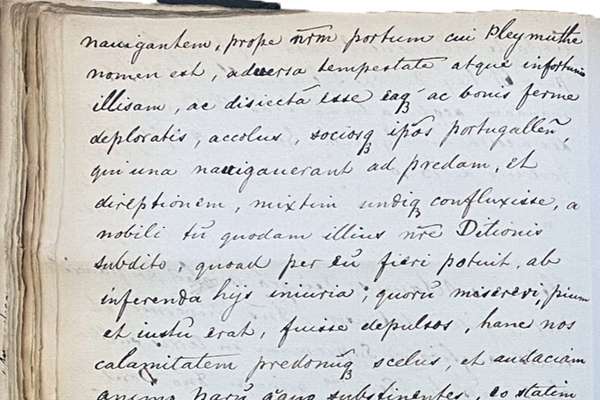
Record revealed
Records that share similar topics with this record.