Focus on
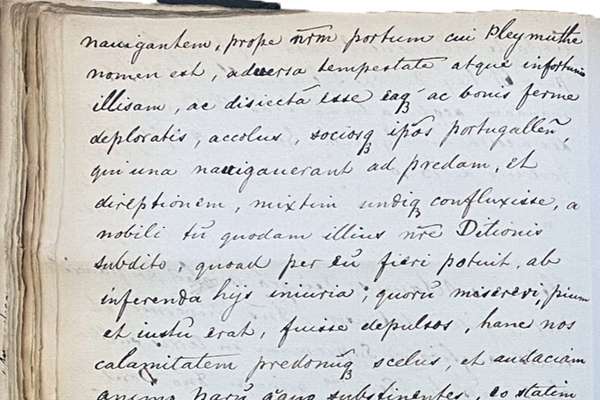
The corsair state of Rabat-Salé

On the Atlantic coast of Morocco are two cities that became one of the most substantial Islamic ports of the 17th Century.
Series
Catalogue reference: QFA 1
QFA 1
An index of about 30,000 handwritten index cards describing seals held in The National Archives and arranged by categories, for example, Royal, Official Monastic, Armorial. Each card (or set of cards) gives the name of the seal owner, the date of...
An index of about 30,000 handwritten index cards describing seals held in The National Archives and arranged by categories, for example, Royal, Official Monastic, Armorial. Each card (or set of cards) gives the name of the seal owner, the date of the document to which the seal is attached, and the colour, shape, size, subject of design, and legend of each seal with a cross reference to further (poorer) impressions in The National Archives and to examples described the British Museum [Library] Catalogue of Seals (1886-1900). Green cards give bibliographical information to seals whether held in The National Archives or not; many of the books and journals referred to are in The National Archives Library.
The index cards are in English, with some Latin and overseas legends within the seal descriptions.
The arrangement is by original index card drawers with sub-divisions within each drawer.
The National Archives's reference given on the front of the card is to the seal described there, with further inferior examples listed whether or not in the same series. In some cases these pre-date the modern letter coding system, for example 'Loose seals' or 'Scots Docts' but these can be converted by referring to Discovery or Guiseppi’s, Guide to the Contents to the Public Record Office, 3 vols (1963).
The National Archives
The index was begun in 1913 by Sir William St John Hope, followed by R C Fowler, an assistant keeper, until his death in 1929. Henceforth cards were completed sporadically by staff in the Editorial and Search Departments (and their successors) of the Public Record Office and The National Archives.
In 2012 a team of volunteers under the guidance of a staff member at The National Archives, ensured that unsorted cards were placed in appropriate drawers and that information on the back of cards was either transferred to a new card (immediately following) or on to the front of the existing card. This did not include the transferring of stamped mould numbers as this number can be found in Collection Care and because moulds are now very rarely made.
Supplementary Finding Aids from The National Archives
Public Record Office: Search Department (and Successors): Digitised Seals Register
Focus on
Focus on

Record revealed
Records that share similar topics with this record.