Focus on
Emily Capper and the 1934 Gresford Colliery disaster
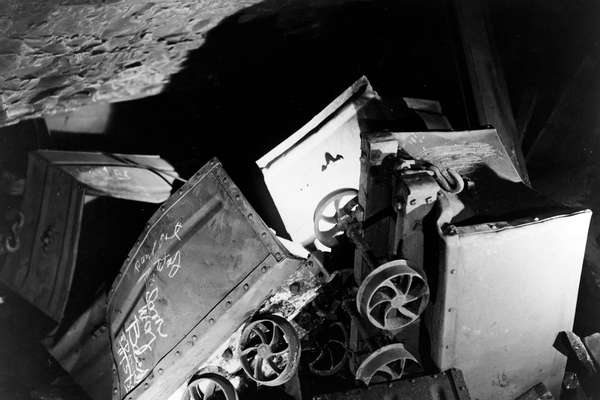
Our records tell the story of Emily Capper's desperate campaign to recover the bodies of the victims, including that of her son.
Division
Catalogue reference: Division within COAL
Division within COAL
Regional administrative records relating to the responsibilities of divisions, areas and collieries.Divisional records: Minutes, COAL 6, COAL 75East Midlands, COAL 50North-Eastern, COAL 48North-Western, COAL 49Northern, COAL 47South-Eastern, COAL...
Regional administrative records relating to the responsibilities of divisions, areas and collieries.
Divisional records:
Area records:
Colliery records:
Charts and tables relating to divisional organisation are in COAL 5
Records of the Scottish Division and of the Scottish area are in the National Archives of Scotland.
From its inception, the National Coal Board delegated responsibility to eight divisional boards, which had been set up by the end of 1946. Each was appointed by and collectively responsible to the national board. The divisions were based geographically on the main groups of coalfields: Scottish, Northern, North-Eastern, North-Western, East Midlands, West Midlands, South-Western, South-Eastern.
Under the divisions the coalfields were grouped into areas, each in the charge of an area general manager. There were 48 areas until their number was reduced to 38 between 1960 and 1966. From 1955 there was also an intermediate level of management between the area and the colliery, known as the group. Each was under a group manager and consisted of not less than two collieries. There were at first about 200 groups, the number being gradually reduced to 150 by the mid 1960s.
In 1967 a new three-tier structure of regional and local organisation replaced the previous five layers, the collieries being directly subject to area organisation, in its turn directly responsible to the board. There were seventeen areas and each Area was directly responsible to Board Headquarters through the Area Director who was responsible for the day to day running. Decisions about policy affecting collieries were made at Area level by the Area Director and confirmation/agreement was then sought from the Board.
In 1975 there were about 250 collieries, managed by colliery general managers, agent managers, or colliery managers, according to their size and complexity, directly accountable to one of the area directors. Each of these was assisted by a deputy director (mining), a deputy director (administration) and a production manager.
Most Areas consisted of 300-400 staff providing specialist services such as industrial relations, medical and X-ray, ambulance service and wages administration including the actual paying out of wages at collieries. Units were normally classified as collieries but this term also included other functions such as stores, workshops, open cast mines and even non-mining activities such as brick works, coke ovens and briquette plants.
Regional Administrative Records
Read stories that share a catalogue subject with this record.
Focus on
Records that share similar topics with this record.