The story of
Anne Lister and Ann Walker's archival legacy
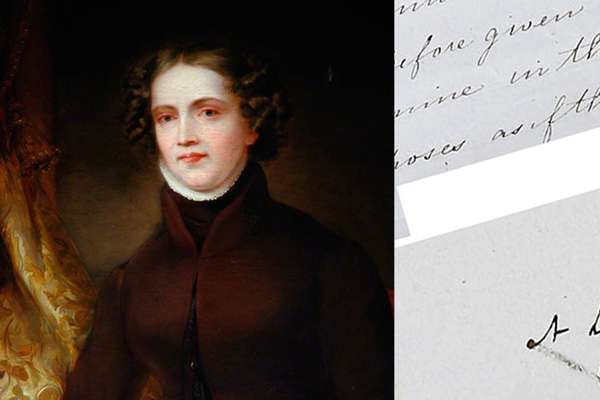
Anne Lister and Ann Walker's romantic relationship defied societal norms of their time, as we can encounter through the archival material they left behind.
Series
Catalogue reference: PROB 28
PROB 28
Answers of respondents sworn by commission and depositions of witnesses taken by commission in causes heard by the Prerogative Court of Canterbury, or during the Commonwealth period, the Court for Probate of Wills and Granting Administrations....
PROB 28
1641-1722
Answers of respondents sworn by commission and depositions of witnesses taken by commission in causes heard by the Prerogative Court of Canterbury, or during the Commonwealth period, the Court for Probate of Wills and Granting Administrations. The depositions in this series are sometimes known as country depositions to distinguish them from depositions taken at the court's registry and known as town depositions.
Each bundle generally comprises the commission, the return of the commissioners, the answers of respondents or the depositions of witnesses, and sometimes a list of the interrogatories administered to the witnesses. Some bundles may be accompanied by citatory instruments requiring the attendance of witnesses. Depositions are much more common than answers.
The commissions and returns of commissioners are in Latin. They give the name of the cause, its nature, the names of the commissioners, and the times and places where depositions were taken.
Answers of respondents, depositions of witnesses, and the interrogatories administered to witnesses are in English. Depositions take the form of responses to the interrogatories submitted by the proctors producing them. Witnesses were required to supply their ages and places of residence and places of birth. They signed or otherwise authenticated their depositions.
The vast majority of probate causes were of one of two types: either the authenticity of a will was contested, or in causes where the deceased died intestate, and one of the parties to the estate sought letters of administration to administer the deceased's estate, the identity of the deceased's next of kin was disputed. Answers of respondents and depositions of witnesses in the former types of causes therefore relate to the circumstances in which wills were made and the states of mind and testamentary capacities of testators. In the latter types of causes respondents and deponents usually supplied evidence about relationships and marriages. Documents in this series and related series therefore sometimes supply precise and intimate information about the lives of testators and their associates.
Each bundle is catalogued by short title in the form Smith con Jones (where Smith is the name of the plaintiff and Jones the name of the respondent). These short titles include the following Latin words or abbreviations:
Most 'bundles' consist of a single 'file' or envelope. Where a bundle contains two or more 'files', this is noted in the description; in such cases, the individual files are labelled as part A, part B, etc
Many inventories and accounts were apparently removed from these bundles when the records were accessioned in 1977. These were placed in
Public Record(s)
English and Latin
1464 bundle(s)
In 1977 Supreme Court of Judicature
In 1653 the Prerogative Court of Canterbury was abolished and a Court for Probate of Wills and Granting Administrations was established. The Prerogative Court of Canterbury was restored at the Restoration in 1660. These records therefore originate with two distinct courts. However it is likely that for recordkeeping purposes they have always constituted a single series.
If in a cause before the Prerogative Court of Canterbury a respondent was unable to travel to the registry of the court to swear to his or her answer he or she might be sworn elsewhere by commission. Equally if a witness to a cause was unable to depose at the registry of the court the proctor acting for the party who wished to produce the witness sought a commission from the judge of the court for the witnesses to depose before commissioners.
Commissioners were almost invariably ministers of the Church of England, and the returns of the commissioners were executed in the relevant parish church. Notaries public were appointed to take the depositions and they attested the commissioners' returns.
Records of the Prerogative Court of Canterbury
Prerogative Court of Canterbury and Court for Probate of Wills and Granting Administrations: Cause Papers taken by Commission from 1642 to 1722
The story of
Record revealed
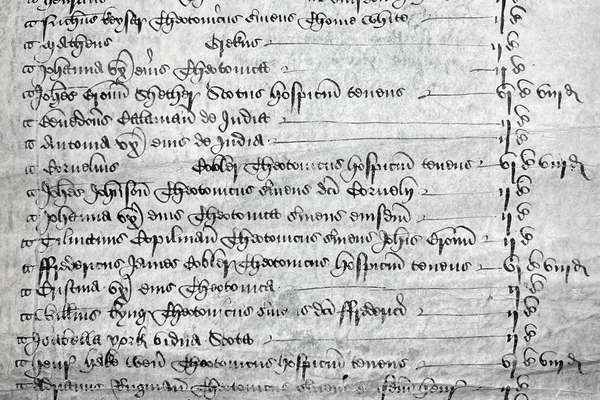
Record revealed
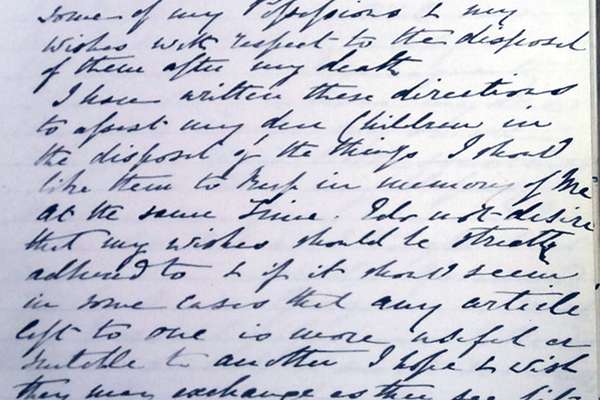
Records that share similar topics with this record.