Record revealed
Copy of Henry VIII's diplomatic assurances to João III of Portugal
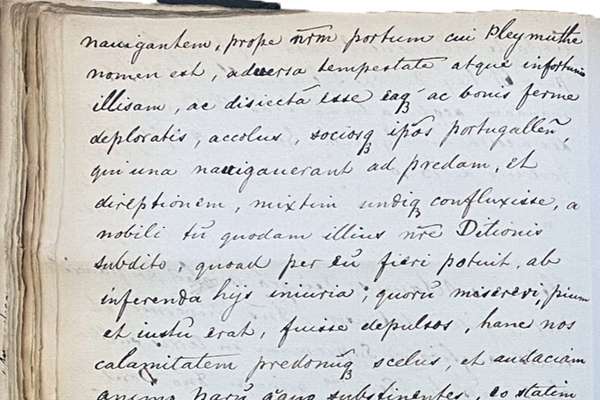
Recently rediscovered, this letter offers new archival evidence into Britain and Portugal's shared history.
Sub-sub-fonds
Catalogue reference: POST 54
This record is about the Post Office: Postage Stamps: Records dating from 1840-1996.
Maybe, but not on The National Archives website. This record is held at The Postal Museum. How to view it.
Not at The National Archives, but you may be able to view it in person at The Postal Museum. How to view it.
This series comprises minutes, reports, correspondence and statistics relating to postage stamps. It relates to the design; selection of designs and production of postage stamps, matters concerning responsibility for production costs, the use of stamps as remittance, the introduction of King George V postage stamps, and questions regarding postage stamps put to the Postmaster General through Parliament.
Please see The Postal Museum's online catalogue for descriptions of individual records within this series.
The material is arranged in chronological order within sub-series.
From the introduction of penny postage in 1840 all stamps and stamped stationery was produced, distributed and paid for by the Inland Revenue's Commissioners of Stamps and Taxes. In December 1876 the Inland Revenue suggested that it would be more appropriate for these costs to be met by The Post Office. At the beginning of the financial year in 1883 the Treasury instructed The Post Office to budget for the cost of stamp production. (POST 54/3).
Although The Post Office was now footing the bill, the Inland Revenue retained responsibility for manufacturing and distribution arrangements until 1 April 1914. On this date The Post Office took over all operations at the Inland Revenue's Somerset House stamp distribution centre for England and Wales. This involved the manufacture and distribution of all postage stamps, adhesive revenue and fee stamps, insurance stamps, postal orders, licenses, savings bank coupons, stamped postal stationery and telegraph forms for use in England and Wales. The transfer was authorised by the Treasury and"The Inland Revenue and Post Office (Powers & Duties) Order" was published by his Majesty's Stationery Office in March 1914. (POST 54/36).
The complicated relationship between the Inland Revenue, The Post Office, stamp designers, printers and printing hardware manufacturers is well represented in correspondence and memoranda relating to the introduction of King George V postage stamps following his ascension to the throne in 1910. (POST 54/48 - 49).
In 1962 yet another authority was to officially enter the sphere of postage stamp production. The existing relationship between The Post Office and the Council of Industrial Design was reviewed and the Postmaster General's new Stamp Advisory Committee was created consisting of Post Office and COID members. The role of the committee was clearly defined in a memorandum agreed by both parties. (POST 54/16). The SAC continued to influence the issue of postage stamps primarily through making recommendations to Royal Mail for commemorative stamp subjects and the selection of final designs. Other matters relating to the production and marketing of stamps and philatelic productsbecame the responsibility of The Post Office Stamps and Philately Board.
Post Office: Postage Stamps: Records
Read stories that share a catalogue subject with this record.
Record revealed
Record revealed
Record revealed