Record revealed
Copy of Henry VIII's diplomatic assurances to João III of Portugal
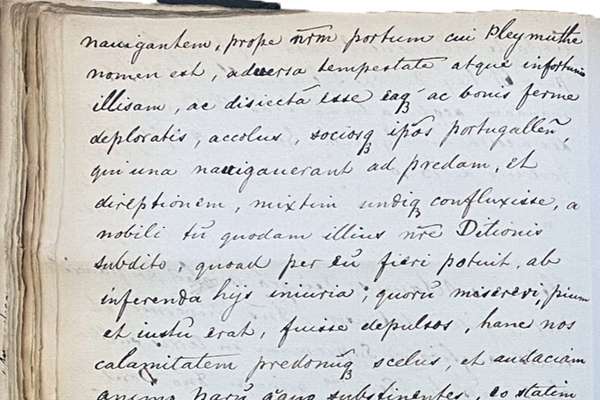
Recently rediscovered, this letter offers new archival evidence into Britain and Portugal's shared history.
Sub-sub-fonds
Catalogue reference: POST 53
This record is about the Post Office: Inland and Overseas Postage Rates dating from 1735-1982.
Maybe, but not on The National Archives website. This record is held at The Postal Museum. How to view it.
Not at The National Archives, but you may be able to view it in person at The Postal Museum. How to view it.
This series comprises material concerned with postage rates, in the form of reports, correspondence relating to alterations of postage rates and franking privileges, postage rate tables based on individual post towns, both inland and overseas, and House of Commons journal extracts covering franking privileges.
Please see The Postal Museum's online catalogue for descriptions of individual records within this series.
'Post-stage' rates for letters carried on the post-roads out of London were introduced in 1635 with the establishment of a state run postal service for the public's letters. The rate was based, primarily, on mileage and on the number of sheets the letter was comprised of, heavier letters were charged by weight. Later, Penny Posts were set up for the collection and delivery of local letters, based on cities and other major centres beginning in London in 1680 and later these were extended to other provincial centres. Postage on general mails was normally paid by the recipient upon delivery.
Acts of Parliament and later Treasury Warrants gave authority for changes in rates and laid down charges for new services as they were introduced. The most significant was the Act of 1839, which led to the introduction of Rowland Hill's scheme for a Uniform Penny Postage in 1840. Postage rates were now based on weight and prepayable by means of the newly introduced stamped stationery and the more popular adhesive postage labels (postage stamps). The Postal Reform of 1840 also removed from Peers and ordinary Members of Parliament their privilege of franking letters for free transmission through the post.
The formation of the Universal Postal Union in 1874 led to uniformity of postage rates for overseas mail. Penny Postage within the Empire began on Christmas Day 1898. Two-tier postage, based on speed and offering the choice of a higher first-class rate to give fast delivery or a second-class rate for slower service, was introduced on 16 September 1968.
Post Office: Inland and Overseas Postage Rates
Read stories that share a catalogue subject with this record.
Record revealed
Record revealed
Record revealed