Record revealed
Copy of Henry VIII's diplomatic assurances to João III of Portugal
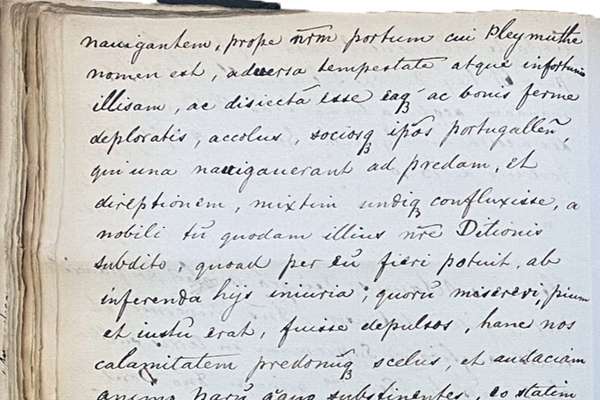
Recently rediscovered, this letter offers new archival evidence into Britain and Portugal's shared history.
Sub-sub-fonds
Catalogue reference: POST 24
This record is about the Post Office: Newspaper Post dating from 1791-1993.
Maybe, but not on The National Archives website. This record is held at The Postal Museum. How to view it.
Not at The National Archives, but you may be able to view it in person at The Postal Museum. How to view it.
This series relates to the transmission of newspapers by post and comprises records relating to the franking privilege of the clerks of the road, the transmission of newspapers overseas and the postage rates for Newspaper Post. The majority of the series consists of published lists of newspapers registered at the Post Office for transmission under the Newspaper Post. (POST 24/22 - 24/79).
Please see The Postal Museum's online catalogue for descriptions of individual records within this series.
The material is arranged in chronological order within series.
See also POST 23
Officials of the Post Office acted as the first newsagents in this country since the establishment of the public postal service. Six postal officials entitled 'clerks of the road' were privileged to frank gazettes at 2d, a reduced charge from letter post. Under the terms of the Franking Act 1764, newspapers bearing the signature of a Member of Parliament or sent to a member at any place named by him, were to go free.
The Newspaper Office was established at the General Post Office in 1782 by John Palmer, following criticisms relating to the treatment of newspapers. With the coming of the French Revolution the clerks in the Foreign Office established a large foreign news agency. The Ship Letter Act of 1815 contained an important provision in favour of newspapers, providing the first enactment that allowed newspapers to go out of the United Kingdom at a cheaper rate than letters.
The act of 1764 also authorised Members of Parliament to frank newspapers. Many extended the provisions of the act by allowing free postage to booksellers and newsagents who rapidly took over a considerable part of the distribution of newspapers from the clerks of the road. An Act of 1825 legalised the free transmission of newspapers by post. In 1830 news vendors presented a petition to Parliament protesting against Post Office servants being allowed to compete with private dealers, and on 5 April 1834, the Post Office ceased to have a privileged interest in the franking of newspapers.
An act of 1855 abolished the compulsory payment of stamp duty on newspapers. Newspaper proprietors were allowed the option of printing on paper stamped to denote payment of stamp duty and thereby qualifying for free transmission by post or using un-stamped paper and paying normal rates of postage.
The Post Office Act of 1870 provided that newspapers fulfilling the conditions specified in the act were, after registration by the Post Office, entitled to transmission within the United Kingdom at a rate of ½d irrespective of weight. In 1897 weight restrictions were introduced. A grant of preferential tariff to the press was declared by a Treasury Committee in 1875, enabling the Post Office to transmit press releases and news messages to newspapers and other news institutions at the press tariff rate. By the Post Office (Newspapers Published in British Possessions) Act of 1913, copies of newspapers printed and published in any British possession or protectorate were admitted to the benefit of the inland newspaper rate. The Canadian Magazine Post which was introduced in 1907 allowed for the transmission of all newspapers registered at the Inland Newspaper rate and publications issued at intervals of not more than 31 days and subject to certain conditions.
Post Office: Newspaper Post
Read stories that share a catalogue subject with this record.
Record revealed
Record revealed
Record revealed