Record revealed
Copy of Henry VIII's diplomatic assurances to João III of Portugal
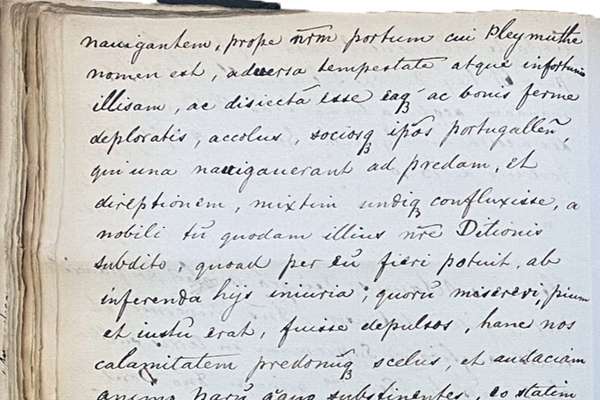
Recently rediscovered, this letter offers new archival evidence into Britain and Portugal's shared history.
Sub-sub-fonds
Catalogue reference: POST 16
This record is about the Post Office: Postal Drafts dating from 1912-1969.
Maybe, but not on The National Archives website. This record is held at The Postal Museum. How to view it.
Not at The National Archives, but you may be able to view it in person at The Postal Museum. How to view it.
This series relates to the postal draft system.
Please see The Postal Museum's online catalogue for descriptions of individual records within this series.
Chronological order within sub-series.
All pieces are 1 file unless otherwise stated
History of postal drafts:
With the passing of the National Insurance Act 1911, Approved Societies acting as agents of the Ministry of Health for the paying of National Insurance benefits approached the Post Office for a means of sending small remittances through the post, postal and money orders being unsuitable. An Interdepartmental Committee, including representatives of the Post Office and the National Health Insurance Joint Committee, was appointed by the Treasury in June 1913 to consider the matter and the postal draft was the outcome of the Committee's recommendations. The service was introduced at the end of 1914 with the approval of the Treasury and without specific statutory authority. Very few Approved Societies in fact made use of the system, preferring to pay benefits in person.
During the First World War the use of postal drafts was extended, by Treasury authority, to various Government departments and some quasi-Government departments, including departments established in the United Kingdom by Colonial Governments. The War Office and Admiralty were amongst the first departments granted permission to use the system for the payment of pensions and reserve pay. Postal drafts were a more economical method of sending remittances through the post and Government departments were encouraged to use them in place of money orders.
In 1934 a Postal Draft Committee report recommended extension of the system, by statute, to Friendly Societies, Trades Unions, Local Authorities, Public Utility Corporations, charitable organisations of a permanent character and other similar bodies. Nothing emerged from those recommendations and the majority of non-Governmental applicants were denied access to the system by the Post Office, which cited practical difficulties and lack of statutory authority. No definite policy for granting or refusing permission to utilise the system was ever established.
The system of postal drafts ceased in 1969 with the introduction of Girobank services.
The postal draft system:
The postal draft was a form of cheque for small sums drawn on the Postmaster General. It provided for the payment of money which had to be remitted by post. Printed forms of drafts were supplied by the Post Office to issuing authorities-Approved Societies or Government departments-which entered amounts and transmitted them to payees. Most forms were printed on watermarked paper and further protected by a colour band. The maximum amount payable was printed on the draft. Drafts could be cashed at any Post Office in Great Britain, Northern Ireland and the Irish Republic or at a specified post office. For the payment of sums over £10 evidence of identity was normally required from the payee. Paid drafts were returned to the issuing authority by the GPO and the account rendered. Advances to cover estimated payments were sent by issuing authorities to GPO Headquarters.
Post Office: Postal Drafts
Read stories that share a catalogue subject with this record.
Record revealed
Record revealed
Record revealed