Record revealed
Copy of Henry VIII's diplomatic assurances to João III of Portugal
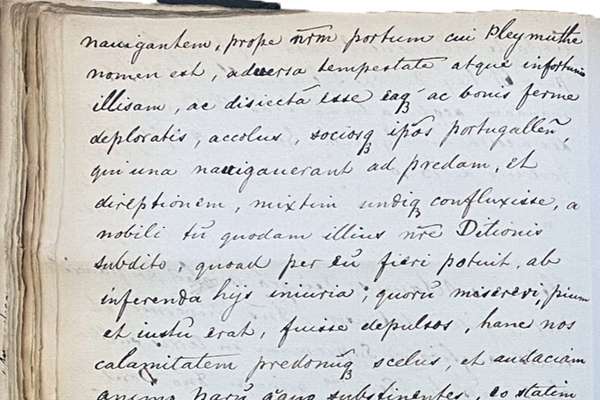
Recently rediscovered, this letter offers new archival evidence into Britain and Portugal's shared history.
Sub-sub-fonds
Catalogue reference: POST 2
This record is about the Post Office: Receiver General's Cash Books dating from 1677-1809.
Maybe, but not on The National Archives website. This record is held at The Postal Museum. How to view it.
Not at The National Archives, but you may be able to view it in person at The Postal Museum. How to view it.
This series consists of the Receiver General's monthly record of all money received and expended on a monthly or quarterly basis by the Post Office. However, POST 2/107-112, covering the Bye and Cross Road Letter Office, contain quarterly accounts only. Subject, place and name indexes are included in POST 2/1-44, covering 1677-1748, although they are not contemporary compilations.
Please see The Postal Museum's online catalogue for descriptions of individual records within this series.
Chronological order within sub-series.
Dating: In the catalogue the dates of volumes prior to 1752 have been revised in accordance with the modern Gregorian calendar (1 Jan-31 Dec). The Julian calendar, in use up to 1752, ran from 25 March to 24 March (retrogressively). This means that any account book starting or ending between the period 1 Jan to 24 Mar will be dated in the catalogue with the year following the one actually written in the volume. For example, in volume 6 the accounts are dated from 27 Mar 1685 to 24 Mar 1687; the catalogue entry states Mar 1685-Mar 1688.
For further information on the Julian and Gregorian calendars and the change over in 1752 staff or researchers should consult Cheney's Handbook of dates, (London, 1948), which can be found in the general reference book section of the searchroom library.
The Receiver General was an independent appointment, designed to remove all responsibilities for cash from the hands of the Postmaster General. There was, however, another major financial position in the Post Office, the Accountant General, who was appointed by the Postmaster General to keep an account of all revenue. This produced duplication of records. The Receiver General took receipt of all money paid into the Department, and paid costs directly from these funds. The sources of income are mainly payments received from inland letters; window money (postage due on letters handed in by the public to the clerk behind the window of a post office); postmasters; letter receivers; returned letters; charges levied on incoming foreign letters.
Expenditure includes payments for salaries of postmasters, letter carriers, sorters, window men, clerks of the roads and of the inland and foreign offices, inspectors, watchmen and other employees; ship letters; returned letters; accommodation, furnishings and equipment; travelling expenses; allowances and pensions; local taxes; contractors and tradesmen; building, hire, wear and tear of packet ships; captains fees. The balance of cash was transferred to the Exchequer.
Post Office: Receiver General's Cash Books
Read stories that share a catalogue subject with this record.
Record revealed
Record revealed
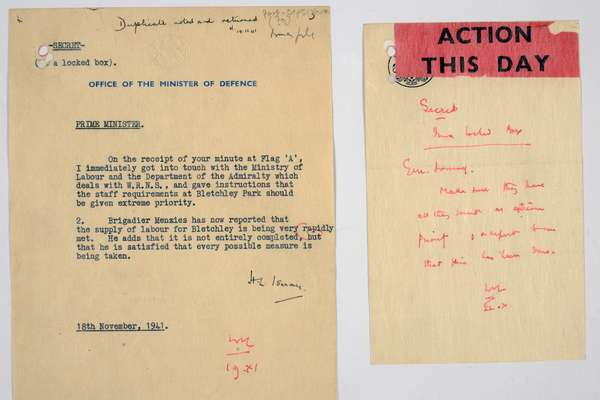
Record revealed