Record revealed
The first American invention to obtain an English patent
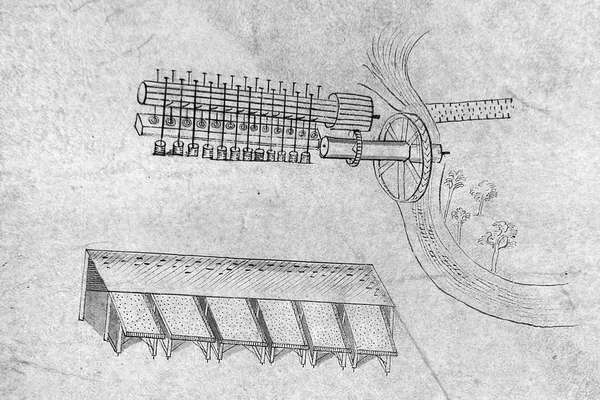
These intricate 1716 drawings were submitted by Sybilla Masters in the final stage of securing a patent for machinery for 'cleaning and curing Indian corn'.
Series
Catalogue reference: LS 7
LS 7
This series contains Lord Steward's Department examinations of tradesmen's bills from 1825 to 1849. They are quarterly examinations, and basically form a summary of bills followed by sundries, digested under heads, with totals of bills and a...
This series contains Lord Steward's Department examinations of tradesmen's bills from 1825 to 1849. They are quarterly examinations, and basically form a summary of bills followed by sundries, digested under heads, with totals of bills and a marginal note of rates paid for various commodities. Totals are given for sections of the examinations, and for the entire quarter's account. These are not signed as examined at all, but many of the items are ticked, presumably denoting a form of checking off.
The entries are numbered, and organised by palace or residence. The name of the person is given; the commodity for which payment is required; the date; and the amount. The information contained about the commodities is quite detailed - eg bread is divided into types; fruit, vegetables, meat and fish are specified. Under sundries may be included costs of newspapers, candles, postage, cleaning, repairing and filling ice wells, chimney sweeping, travelling expenses, post horse provision, Board of Green Cloth expenses, etc, and also boardwages. These latter were payments in lieu of food and drink allowances, whilst in attendance on household duties.
LS 7/1-10 comprises a volume per year. From LS 7/11 the composition of the records changes, but not the contents. There is one soft backed volume per quarter, and the individual piece, which covers two or more years is, therefore, made up of a number of parts. These later pieces also contain loose papers with supporting information, such as boardwage bills rendered by individuals, correspondence and lists of items and prices.
The numbers of the items in this series correspond to those of the creditors in the following series, to which this one makes a "contents table" for the years in which they overlap. Tradesmen's bills and the sundries covered by this series fall into the category of bills known as extraordinary, that is, not regular and predictable; accounts rendered for extraordinary expenses were known as creditors, and it is these that are detailed in LS 8
Lord Steward's Department: Examinations of Bills
Read stories that share a catalogue subject with this record.
Record revealed
Record revealed
Record revealed
Records that share similar topics with this record.