The story of
Maud Allan
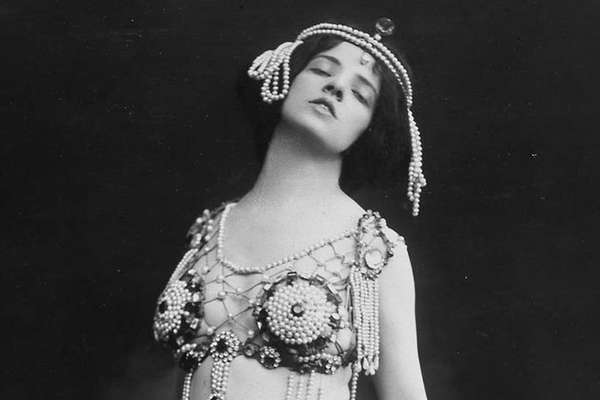
Maud Allan (1873–1956) was a celebrated West End dancer in the early 20th century until she became entangled in one of the most sensational trials of the 1920s.
Series
Catalogue reference: KB 166
KB 166
These docket rolls record the issue of latitats by the Court of King's Bench, with the entries arranged in nine county groups, with basic details about those involved.
These docket rolls record the issue of latitats by the Court of King's Bench, with the entries arranged in nine county groups, with basic details about those involved.
Physically the rolls are in traditional plea roll format, filed at the head and covering normally two terms and the vacation between them. Each in fact consists of a number of smaller rolls of a few rotuli each, linked together by their own parchment thong, tied together at the head. Those subsections each carry material on one of nine groups of counties sharing the same initial letter or collection of letters. Those county groups were consistently as follows:
They include all English counties except the palatinates and of course Middlesex itself, plus London and Monmouthshire. Entries for boroughs which were counties of themselves are included under the county in which they lay, for example Bristol under Gloucestershire.
There are separate rotuli for each term or vacation. In some cases more than one rotulus is needed for a county. In others the numbers of entries is sufficiently small for shorter rotuli to be filed. In a few instances, in counties like Westmorland far from London and with few litigants, there might be no rotulus at all for a particular term or vacation. Each individual entry briefly records on whose behalf a latitat was issued, against whom, when it was returnable in court and the name of attorney responsible for securing the issue of the writ. In the early years covered by the surviving rolls the precise date of issue was recorded by the use of specific date headings supplemented by Arabic numerals relating to subsequent days in the margin, but that practice was soon abandoned. The entries specify where a writ was not the first latitat in a particular suit but a sicut alias or sicut pluries subsequent to an initial writ which had failed to secure the appearance of the defendant.
By 1619 the issue of writs of latitat was being recorded in a series of docket rolls. It is not clear whether the rolls ceased to made up in or soon after 1632, the date of the latest so far discovered, since that time coincides with a major gap in all the main Kings Bench file series, but it must be assumed that they had come to an end by the 1650s, when files again begin to survive in significant numbers. Writs of latitat returned non est inventi had probably ceased to be filed by the time the latitat rolls begin; those returned cepi corpora are in KB 151
Court of King's Bench: Plea Side: Latitat Rolls
Read stories that share a catalogue subject with this record.
The story of
The story of
Records that share similar topics with this record.