The story of
Maud Allan
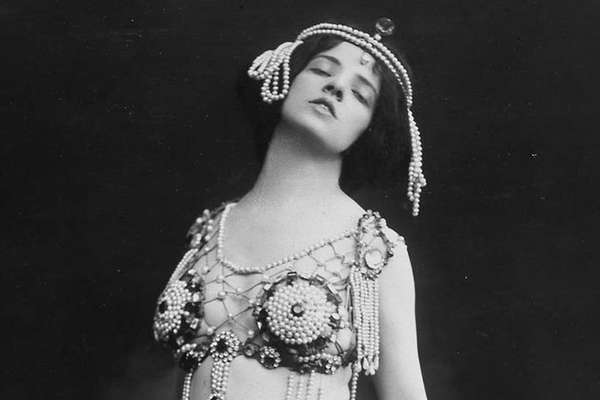
Maud Allan (1873–1956) was a celebrated West End dancer in the early 20th century until she became entangled in one of the most sensational trials of the 1920s.
Series
Catalogue reference: KB 119
KB 119
Documents drawn up by claimants in cases of ejectment, a form of trespass developed to provide protection for the rights of lessees of property, but later also used by freeholders in preference to older forms of procedure to try title to...
Documents drawn up by claimants in cases of ejectment, a form of trespass developed to provide protection for the rights of lessees of property, but later also used by freeholders in preference to older forms of procedure to try title to property.
Each declaration was drawn up by the claimants normally at the suit of a fictitious plaintiff to whom he had leased the property (normally John Doe) against a fictitious defendant (normally Richard Roe) called the 'casual ejector'.
The declarations are arranged in term bundles, the earlier system of files having broken down by the early eighteenth century, with affidavits of service, testifying that the declaration has been served on the real defendant, usually annexed.
The only surviving appearance book, for Essex 1728-1755, is in J 89/27/2
It is possible that early declarations in ejectment might be found in the Declaraciones files until about 1630 in
For the rest of the century until the beginning of this series the declarations have not survived.
The action of ejectment grew up to protect the rights of lessees of property, whose holding was technically only a chattel. As such it could be the subject of an action of trespass for damages, and although that could compensate for past wrongs it could not protect continuing rights. A decision in a case of 1499-1500, later confirmed, allowed the plaintiff to recover the term of his lease as well as the damages occasioned by the trespass, so ejectment became in effect a real action for a lessee. About 1570 the procedure became available to freeholders also. They wanted to use it because of its superior efficiency compared with the alternative remedies by writs of entry or possessory assizes, and because it allowed trial by jury.
As a result of that development it began to be used to try title to freehold, the freeholder leasing the property to a friend for the purpose of bringing the action; he then would be expected to be ejected by the landlord, against whom the case would be brought. The judges preferred the action to the older real actions and so refused to allow the defendant to avoid the issue of title to the land by disputing the lessee's entry into it and the ejectment by the defendant. As a result it became convenient to use fictional lessees rather than real ones. Ejectment could be brought in the other common law courts, including those of the palatinates, as well as King's Bench.
Declarations in ejectment were drawn up by the claimant, often on printed forms with the particular details filled in, and with affidavits of service, swearing that the tenants or their wives had been served with copies of the declaration and had had it read over to them where possible, annexed. The affidavits were sworn either before a judge in London or a commissioner for oaths in the country, and rules were developed as to what they should contain. Each declaration was at the suit of a nominal, fictitious, plaintiff, latterly normally John Doe, against a nominal, fictitious, defendant, often Richard Roe, called the 'casual ejector', and stated that the premises, whose location had to be clearly given, had been leased to Doe by the real plaintiff bringing the action, Doe then having been ejected by Roe. As a result of that development it began to be used to try title to freehold, the freeholder leasing the property to a friend for the purpose of bringing the action; he then would be expected to be ejected by the landlord, against whom the case would be brought. The judges preferred the action to the older real actions and so refused to allow the defendant to avoid the issue of title to the land by disputing the lessee's entry into it and the ejectment by the defendant. As a result it became convenient to use fictional lessees rather than real ones. Ejectment could be brought in the other common law courts, including those of the palatinates, as well as King's Bench.
As a result of that development it began to be used to try title to freehold, the freeholder leasing the property to a friend for the purpose of bringing the action; he then would be expected to be ejected by the landlord, against whom the case would be brought. The judges preferred the action to the older real actions and so refused to allow the defendant to avoid the issue of title to the land by disputing the lessee's entry into it and the ejectment by the defendant. As a result it became convenient to use fictional lessees rather than real ones. Ejectment could be brought in the other common law courts, including those of the palatinates, as well as King's Bench.
In the earlier of the surviving declarations John Doe and Richard Roe appear more often as pledges for prosecution than as plaintiff and defendant, and there are other fictional litigants like Thomas Notitle and John Goodright, but later Doe and Roe invariably appear in those roles. The abolition of legal fictions by the Common Law Procedure Act 1852 brought procedure by ejectment properly so-called to an end, although the term 'ejectment' continued to be used instead of the official title of 'action for the recovery of land'; before its abolition ejectment had already become the only action for the specific recovery of land.
Court of King's Bench: Plea Side: Declarations in Ejectment
Read stories that share a catalogue subject with this record.
The story of
The story of
Records that share similar topics with this record.