The story of
Maud Allan
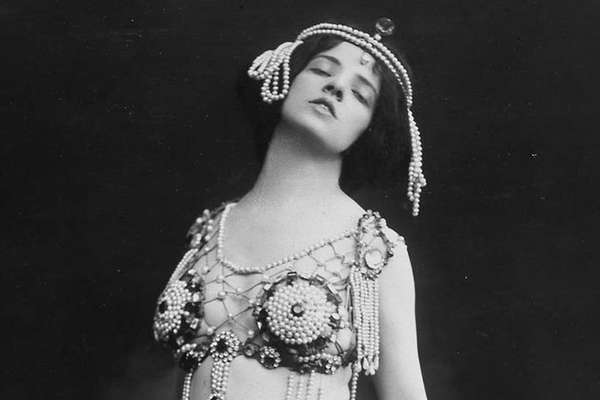
Maud Allan (1873–1956) was a celebrated West End dancer in the early 20th century until she became entangled in one of the most sensational trials of the 1920s.
Series
Catalogue reference: KB 37
KB 37
The main series of Crown Side files. The main contents are writs and precepts to secure the appearance of defendants and juries, with their returns, including jury panels and notifications of outlawry.The earliest files include inquisitions into...
The main series of Crown Side files. The main contents are writs and precepts to secure the appearance of defendants and juries, with their returns, including jury panels and notifications of outlawry.
The earliest files include inquisitions into the chattels and extents of the lands of those outlawed for failure to appear. The writs and associated documents were arranged in a fixed county order until the mid fifteenth century.
KB 136 references were given to files identified during the writ sorting undertaken between 1930 and 1938, which grouped material from several King's Bench file series from the reigns of Edward I to Richard III into a single series. They were transferred into their present series by transfer warrants prepared in 1967 (now in PRO 40/14), but not before they had been used in print in an article by Conway Davies in the Bulletin of the Institute of Historical Research, XXXVI (1953), 147-152. The 1930s numbers are easily identifiable on many of the file covers.
The surviving files are numbered on a systematic basis. The first element is the reign number running from 0 (Edward II) to 19 (William & Mary). The second is the regnal year or, during the Interregnum, the calendar year, with the year beginning on Lady Day (25 March), which is the dating used on the file covers. The third element represents the term within the year, Michaelmas, Hilary, Easter or Trinity. The numbers used to represent the different terms varies from reign to reign, according to the point in the year at which the new monarch succeeded to the throne. In the event of further files being identified, they will be added at the appropriate point in the numerical structure.
Throughout its life the Brevia Regis file was always a term file. Until the mid 1440s it was arranged internally in a fixed county order, each county sequence being arranged in order of return days. The same county order was used in the Brevia Files of the Plea side (KB 136) and in the files of the Court of Common Pleas (CP 52), where it originated in the 1260s. The order from the back or cover end of the file, was: Norfolk, Sussex, Essex, Hertfordshire, Cambridgeshire, Huntingdonshire, Middlesex, London, Kent, Surrey, Sussex, Hampshire, Wiltshire, Somerset, Dorset, Devon, Cornwall, Herefordshire, Worcestershire, Gloucestershire, Oxfordshire, Berkshire, Buckinghamshire, Bedfordshire, Northamptonshire, Rutland, Shropshire, Staffordshire, Warwickshire, Leicestershire, Nottinghamshire, Derbyshire, Lincolnshire, Yorkshire, Northumberland, Cumberland, Westmoreland, Lancashire (when not a palatinate, before 1351 and from 1361 to 1377).
The range of counties covered in what survives of each file is given for the period up to and including 24 Henry VI, so that if only part of a file survives or has so far been identified it is possible to tell which counties are included in the surviving part. From 27 Henry VI no clear order is discernible, although the writs are still filed in county bunches and the writs returnable at the later return days of a term are usually found towards the top of the file; where a file has clearly lost some of its contents the fact that it survives only in part is specified in the catalogue.
There are often cross-references to the appropriate rotuli of the controlment rolls in KB 29
This is the main series of files of the Crown Side of the Court of King's Bench. It came into existence as the Crown Side developed in order to accommodate material previously filed in the undifferentiated Brevia Files of the court (KB 136); the Brevia thereafter became an exclusively Plea Side file. During the period between 1290 and 1319 a separate 'Rex' section of the King's Bench Plea Rolls (KB 27) gradually developed to carry crown cases. The Brevia Regis file probably developed in parallel, although the earliest surviving file yet discovered (incomplete, but clearly in an established format) dates from 1324. In Easter or Trinity term 41 Elizabeth I its title was changed to the less specific 'Brevia'. During most of the Interregnum, from Michaelmas 1651 onwards, both the title file on the cover and the writs themselves were written in English, but they reverted to Latin shortly after the Restoration. The latest file so far identified is dated 1692, but the series probably continued long after that date.
Court of King's Bench: Crown Side: Brevia Regis Files
Read stories that share a catalogue subject with this record.
The story of
The story of
Records that share similar topics with this record.