The story of
Ravenser Odd
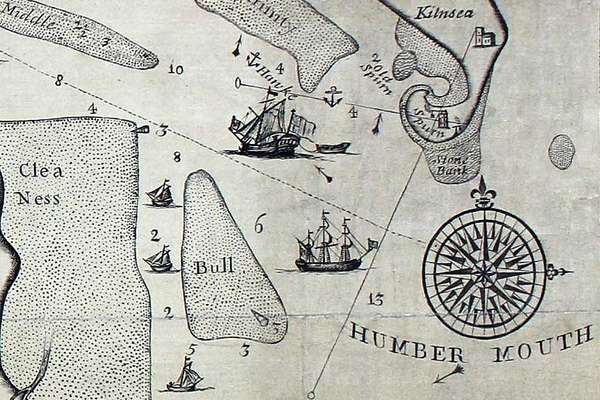
Ravenser Odd was a short-lived island in the mouth of the River Humber. It rose from the sea in the early 13th century and had sunk beneath the waves by 1360.
Series
Catalogue reference: KB 23
KB 23
Special cases referred to King's Bench by the judge and counsel for both parties in an inferior court, particularly assizes or quarter sessions, for a decision on a particular difficult point of law, which decided the outcome of the trial. They...
Special cases referred to King's Bench by the judge and counsel for both parties in an inferior court, particularly assizes or quarter sessions, for a decision on a particular difficult point of law, which decided the outcome of the trial.
They include appeals from general and quarter sessions under the Quarter Sessions Procedure Act 1849, and against decisions by individual justices of the peace under the Summary Jurisdiction Act 1857.
Each item consists of the special case with related documents, sometimes including maps, attached. They do not carry the result of the deliberations by the court.
Chronological calendars from 1869 to 1881 are in IND 1/6713
The superior courts of common law at Westminster had for centuries been able to refuse to enter judgment in cases determined at nisi prius if cause were shown, by means of various categories of motions in banc, why it should not do so. During the eighteenth century a procedure developed by which it was possible, when a difficult point of law arose from a case in one of the inferior courts, for that court to find a general verdict in favour of the plaintiff subject to a special case stated by counsel for both parties for the opinion of a superior court; the final result of the case depended on the decision made by the superior court. The special case was dictated by the trial judge and signed by the counsel for both parties before being filed in the superior court. It was not entered in the record of the court, so the only evidence of it is the filed case papers; the record made after the case was a normal general verdict. It was also possible for a special case to be filed, with the consent of both parties and the judge, before a suit came to trial, a process which came to be regulated by the Common Law Process Act 1852.
The procedure was also developed by statute. In 1849 it was provided by section 11 of the Quarter Sessions Procedure Act that parties wishing to appeal from general or quarter sessions could, with the assent of a judge of one of the superior courts of common law, state the facts in the form of a special case for the opinion of the superior court, which when given was entered on the record of the general or quarter sessions as the judgment. In 1857, by the Summary Jurisdiction Act, parties involved in summary hearing before justices of the peace could by way of appeal state a special case to one of the superior courts; its decision would be final, and by doing so the party in question forfeited the right to appeal to quarter sessions.
Court of King's Bench, Crown Side, and Supreme Court of Judicature, High Court of Justice, King's Bench Division: Special Cases
Read stories that share a catalogue subject with this record.
The story of
The story of
The story of
Records that share similar topics with this record.